
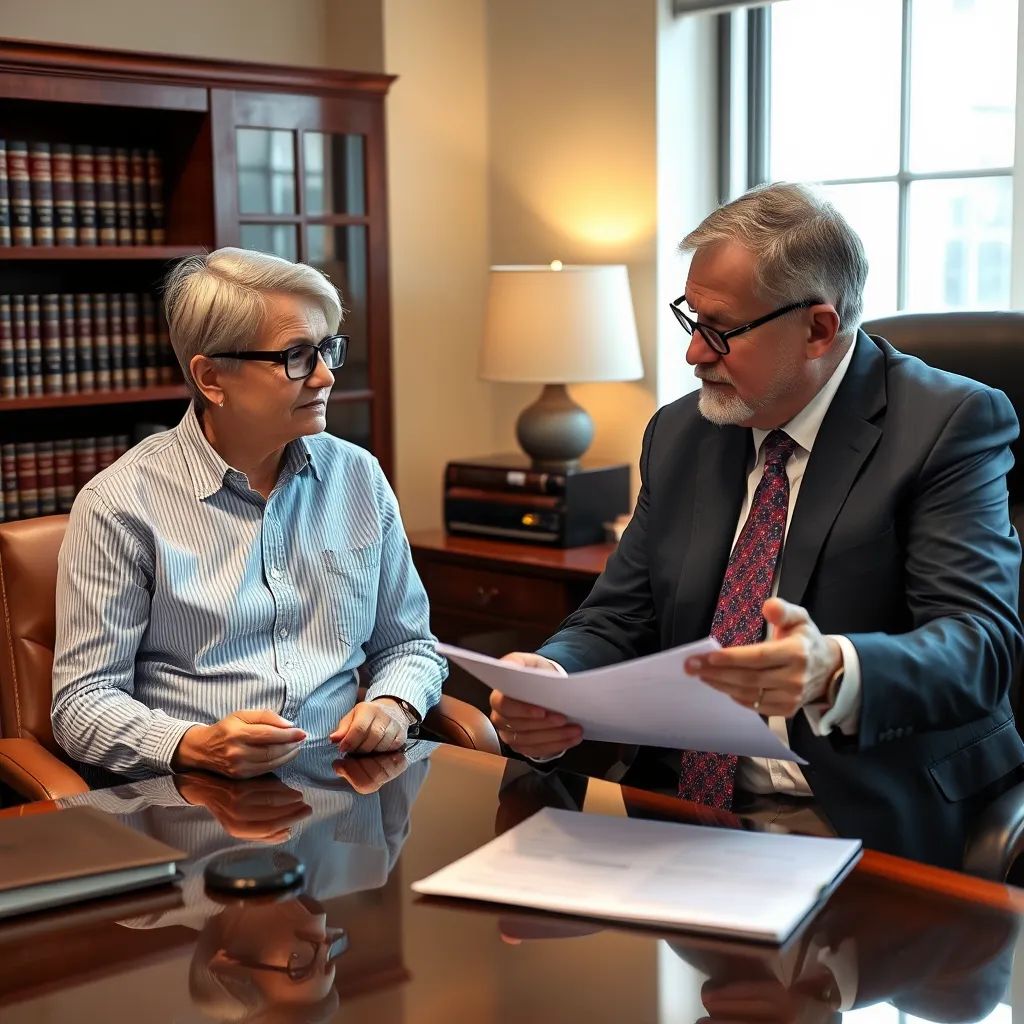
Support Contempt Lawyer Falls Church, VA
When a party fails to pay court-ordered support—whether child support or spousal support—the recipient has the right to seek enforcement through a contempt proceeding. In Falls Church, Virginia, support contempt matters typically arise from orders entered in the Falls Church Juvenile and Domestic Relations District Court or the Falls Church Circuit Court, depending on whether the underlying order was part of a divorce action or a standalone support case. An individual seeking to compel payment must demonstrate that the obligor had the ability to pay but willfully refused. The consequences for contempt can include jail time, fines, and a judgment for the arrears. Navigating this process without experienced counsel can be difficult, especially when the opposing party raises defenses or the arrearage is substantial. Mr. Sris and the firm’s Of Counsel attorneys assist clients with support contempt proceedings in Falls Church, working toward enforcement of court orders while complying with Virginia procedural requirements. For a consultation, call (888) 437-7747. Law Offices Of SRIS, P.C. – Advocacy Without Borders.
What Support Contempt Means in Falls Church
Support contempt refers to a party’s willful failure to comply with a court order directing the payment of spousal support or child support. In Virginia, enforcement is governed by Va. Code § 20-115, which authorizes the court to use its contempt power when an obligor disobeys a lawful order of the court. The court may also rely on its inherent authority under Va. Code § 18.2-456 to sanction contemptuous conduct. In Falls Church, these proceedings are heard in the Falls Church Juvenile and Domestic Relations District Court for standalone support matters, or in the Falls Church Circuit Court when the support order is part of a divorce decree. The procedural requirements differ slightly between the two courts, but the core issue remains the same: whether the failure to pay was willful and whether the obligor had the present ability to satisfy the obligation.
To initiate a contempt proceeding, the moving party files a motion to show cause, which requires the alleged contemnor to appear and explain why they should not be held in contempt. The court then holds an evidentiary hearing where the petitioner must prove the existence of a valid order, the other party’s knowledge of it, and a willful violation. Defenses commonly raised include inability to pay, a change in circumstances that warrants modification rather than contempt, or a purported agreement between the parties to modify the support terms. The Falls Church courts exercise close scrutiny over these matters; the judge may order the obligor to pay a purge amount to avoid incarceration and may award attorney fees to the prevailing party. Because contempt findings can carry significant penalties, representation by experienced counsel is advisable at every stage.
How Mr. Sris and His Of Counsel Handle Support Contempt Cases
Mr. Sris and the firm’s Of Counsel attorneys approach support contempt cases by first evaluating the strength of the underlying order and the evidence of non-compliance. In Virginia, contempt is not automatic—the petitioner must meet a burden of proof, and procedural missteps can lead to dismissal. Mr. Sris and his Of Counsel review the payment history, correspondence between the parties, and any prior court orders to determine whether a contempt motion is the appropriate remedy. When the facts support it, the firm prepares and files a rule to show cause in the correct Falls Church court, ensuring the petition identifies each alleged violation with particularity and includes the legal basis for the contempt finding.
Once the motion is filed, Mr. Sris and his Of Counsel represent clients at the show cause hearing, presenting evidence of the obligor’s income, assets, and payment capacity. If the obligor raises an inability-to-pay defense, the firm challenges it through discovery and cross-examination. Conversely, if a client is defending against a contempt claim, the firm works to demonstrate that the non-payment was not willful—for example, by producing financial records showing a legitimate change in circumstances. The firm also assists with post-hearing enforcement, such as obtaining a wage assignment or a judgment for the arrears. Throughout the process, the goal is to secure compliance with the support order while minimizing the risk of unnecessary incarceration or sanctions.
About Mr. Sris and His Of Counsel Team
Mr. Sris, Owner and Founder of Law Offices Of SRIS, P.C., has practiced law since 1997 and is admitted in Virginia, Maryland, the District of Columbia, New Jersey, and New York. A former prosecutor, he brings insight into courtroom dynamics and the evidentiary burdens that arise in civil enforcement proceedings. He personally oversees the firm’s family law practice, including support contempt matters in Falls Church and throughout Northern Virginia.
The firm’s Of Counsel attorneys are independent practitioners who contract directly with Law Offices Of SRIS, P.C. Mr. Sris and his Of Counsel bring extensive combined legal experience. Results may vary. Collectively, they have handled matters in Falls Church courts involving complex support disputes, including cases where the obligor has substantial assets or lives out of state. The team’s familiarity with local judges, court procedures, and the specific requirements for show cause motions helps clients present their case effectively. Whether representing the moving party seeking enforcement or the respondent defending against contempt, the firm focuses on achieving a practical resolution.
Frequently Asked Questions
How does a Virginia lawyer defend against support contempt charges?
An experienced attorney defends against support contempt by demonstrating that the failure to pay was not willful, usually by proving a material change in financial circumstances, lack of ability to pay, or a procedural defect in the underlying order. In Virginia, contempt requires a willful violation. A lawyer can present evidence such as job loss, medical records, or bank statements to show that the obligor lacked the means to comply. The attorney may also challenge the validity of the original support order or argue that the motion was improperly filed. In Falls Church, the court typically requires the alleged contemnor to appear with counsel, and a well-prepared defense may avoid jail time and result in a payment plan or modification of the support obligation.
What should I do if I am facing support contempt charges in Virginia?
If you are facing support contempt charges, you should consult with a family law attorney immediately, refrain from discussing the case with the opposing party, and gather all financial documents that reflect your income, expenses, and any payments made toward the support obligation. The Falls Church courts take contempt seriously; failing to appear at a show cause hearing can result in a bench warrant. An attorney can help you prepare for the hearing, negotiate a purge amount, and possibly avoid incarceration by proposing a realistic payment schedule. Prompt action is important because once a contempt finding is entered, it can be difficult to reverse.
What is the difference between civil and criminal contempt in a support case?
Civil contempt is intended to coerce compliance with a court order and can be purged by paying the arrearage, while criminal contempt is punitive and sanctions the violation itself, typically with a fixed jail sentence or fine. In Falls Church, most support contempt proceedings are civil in nature; the obligor holds the keys to the jail door—if they pay what they owe, they can be released. Criminal contempt is less common and requires a higher standard of proof, often beyond a reasonable doubt. The court may also use a combination of remedies, such as imposing a sentence but suspending it conditioned on payment. An attorney can help ensure that the proceeding remains within the civil contempt framework where appropriate.
How long does a support contempt case take in Falls Church?
The timeline for a support contempt case in Falls Church depends on court scheduling, the complexity of the financial issues, and whether the parties reach an agreement before the evidentiary hearing. A show cause hearing may be set within several weeks of filing, but if discovery is needed or the obligor contests the arrearage amount, the process can extend for months. In some instances, the court may enter a temporary order requiring periodic payments while the full hearing is pending. Mr. Sris and his Of Counsel work to resolve support contempt matters as efficiently as possible while preserving the client’s rights to a full hearing.
Can I recover attorney fees in a support contempt action?
Yes, Virginia law permits the court to award attorney fees to the prevailing party in a support contempt proceeding, provided the moving party proves the violation was willful and the fees are reasonable. In Falls Church, fee awards are not automatic; the court considers the financial circumstances of both parties and the obligor’s degree of fault. If the obligor’s defense lacked merit or caused unnecessary delay, the court is more likely to shift fees. Mr. Sris and his Of Counsel present evidence of the fees incurred and advocate for the client’s entitlement to reimbursement.
What happens if the obligor lives outside Virginia but the support order was issued in Falls Church?
If the obligor resides in another state, the Falls Church court retains jurisdiction to enforce its own support order, but practical enforcement may involve proceedings under the Uniform Interstate Family Support Act (UIFSA) or registration of the order in the state where the obligor lives. Mr. Sris and his Of Counsel can coordinate with out-of-state counsel or use Virginia’s UIFSA procedures to pursue enforcement across state lines. The obligor’s failure to appear may still result in a contempt finding in Falls Church, and the court can issue a capias or other remedies that have interstate effect. The firm’s multi-state practice is an advantage in these situations, as the team is familiar with the procedural requirements in neighboring jurisdictions.
For additional perspectives on family law matters in the region, see our pages on Fairfax County family law attorney, Fairfax City family law lawyer, and Prince William County family law representation.
For current Virginia statutes governing support enforcement and contempt, review the Virginia Code Title 20 (Domestic Relations). Information about the Falls Church court system is available through the Virginia Judicial System website. Business entity filings and other public records may be obtained from the Virginia State Corporation Commission.
Attorney advertising. Prior results do not guarantee a similar outcome. Results may vary.
Case results depend on a variety of factors unique to each case.