
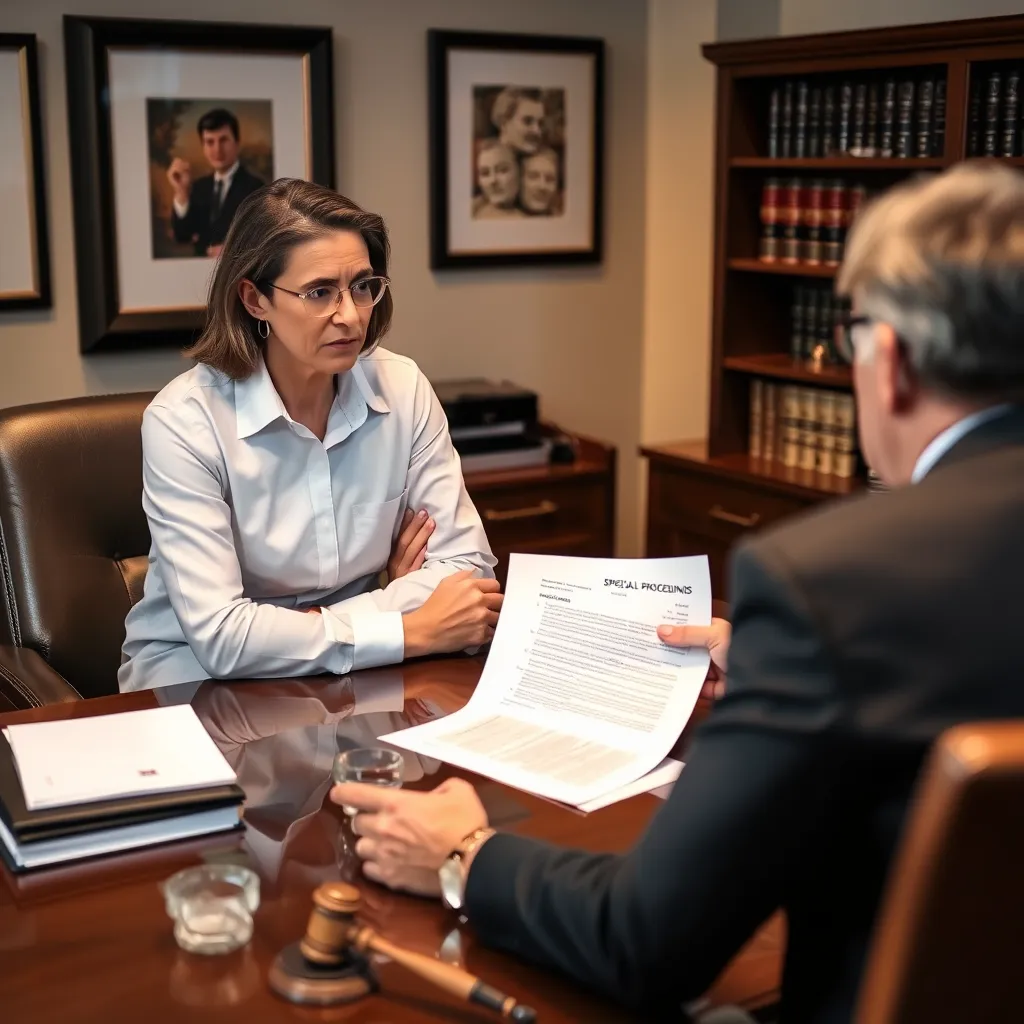
Special Proceedings Lawyer Alexandria, VA
Family law matters in Alexandria, Virginia, sometimes require court involvement beyond the standard divorce or custody case. Certain domestic relations issues proceed through what Virginia courts classify as special proceedings—statutory actions with their own procedural rules, filing requirements, and evidentiary standards. Whether you are seeking to adopt a child, change your name, obtain a protective order, or pursue emancipation of a minor, these matters proceed under specific provisions of the Virginia Code and are heard in designated Alexandria courts. Law Offices Of SRIS, P.C. represents clients in special proceedings before the Alexandria Circuit Court and the Alexandria Juvenile & Domestic Relations District Court, guiding individuals and families through the procedural requirements of each statutory action. Mr. Sris, the firm’s Owner and Founder, has practiced since 1997 and is admitted in Virginia, Maryland, the District of Columbia, New Jersey, and New York. The firm’s Of Counsel attorneys bring experience across multiple practice areas to special proceedings matters, working to advance the interests of each client. To discuss a special proceedings matter in Alexandria, reach Law Offices Of SRIS, P.C. at (888) 437-7747. Law Offices Of SRIS, P.C. – Advocacy Without Borders.
What Special Proceedings Means in Alexandria, Virginia
In Virginia legal practice, the term special proceedings refers to statutory actions that fall outside the standard civil complaint framework. Within family law and domestic relations, special proceedings encompass a range of matters governed by Title 20 of the Virginia Code and related statutes, each with distinct procedural pathways. In Alexandria, these matters are heard in one of two courts depending on the nature of the proceeding. The Alexandria Circuit Court, located at 520 King Street, handles adoptions, name changes, emancipation petitions, and certain guardianship matters. The Alexandria Juvenile & Domestic Relations District Court addresses protective orders in family abuse cases, custody and visitation modifications, and child support enforcement proceedings.
Alexandria, as an independent city within the Eighteenth Judicial District, maintains its own court system separate from Fairfax County. This means special proceedings filed in Alexandria follow the local rules and scheduling practices of the Alexandria courts. For example, a petition for a family abuse protective order under Virginia Code § 16.1-253.1 is heard in the Alexandria Juvenile & Domestic Relations District Court, while a petition for an adult name change proceeds in the Alexandria Circuit Court. Adoption proceedings, governed by Virginia Code § 63.2-1200 et seq., are also within the exclusive jurisdiction of the Circuit Court. Understanding which court has authority over a specific special proceeding is essential, as filing in the wrong court can result in dismissal or delay. The firm’s attorneys are familiar with the procedural distinctions between these Alexandria courts and help clients navigate the correct filing pathway from the outset.
Virginia law imposes specific requirements on many special proceedings that differ from ordinary civil litigation. Adoption petitions, for instance, require home studies, background checks, and in some cases the consent of biological parents or the termination of parental rights. Protective order proceedings involve evidentiary hearings where the petitioner must prove family abuse by a preponderance of the evidence. Name change petitions require the petitioner to demonstrate that the change is not sought for fraudulent purposes and that proper notice has been given. Each special proceeding carries its own statutory prerequisites, and the Alexandria courts apply these requirements consistently. Working with an attorney who understands the procedural landscape helps ensure that filings are complete and that statutory deadlines are met.
How the Firm Handles Special Proceedings Cases
When a client contacts Law Offices Of SRIS, P.C. about a special proceedings matter in Alexandria, the firm begins by identifying the exact statutory authority for the proceeding and the court with jurisdiction. This initial assessment determines whether the matter belongs in the Alexandria Circuit Court or the Juvenile & Domestic Relations District Court, what forms and supporting documents are required, and what legal standard the court will apply. The firm’s approach is grounded in the specific procedural requirements of each statutory action, and Mr. Sris and the firm’s Of Counsel attorneys work to prepare filings that meet the Alexandria courts’ expectations for completeness and legal sufficiency.
For adoption proceedings, the firm assists clients with the petition, the required home-study documentation, and the finalization hearing before the Alexandria Circuit Court. For protective order cases, the firm represents clients at both the preliminary hearing stage and any subsequent permanent protective order hearings, presenting evidence and witness testimony as appropriate. Name change petitions and emancipation proceedings each involve distinct procedural steps that the firm navigates on the client’s behalf. Throughout the process, the firm communicates with clients about court dates, required appearances, and any additional documentation the court may request. While timelines vary by case complexity and court scheduling, the firm works to advance each matter efficiently through the Alexandria court system.
About Mr. Sris and the Firm’s Of Counsel Attorneys
Mr. Sris founded Law Offices Of SRIS, P.C. in 1997 and serves as its Owner and Founder. A former prosecutor, Mr. Sris is admitted to practice in Virginia, Maryland, the District of Columbia, New Jersey, and New York. His experience spans multiple practice areas, including family law matters such as special proceedings, divorce, child custody. India is not a signatory to the 1980 Hague Convention on Civil Aspects of International Child Abduction., and equitable distribution. Mr. Sris testified before the Virginia House Courts of Justice Committee in support of 2019 HB 635 (chief patron Del. David Bulova). The firm’s Of Counsel attorneys contribute experience across various legal disciplines, and together the firm represents clients in Alexandria and throughout Northern Virginia. To schedule a consultation about a special proceedings matter in Alexandria, reach the firm at (888) 437-7747.
Frequently Asked Questions
What types of special proceedings does a family law attorney handle in Alexandria?
A family law attorney in Alexandria handles special proceedings including adoptions, name changes, protective orders, emancipation of minors, custody modifications, and guardianship matters. These statutory actions are governed by specific provisions of the Virginia Code, primarily Title 20 and related chapters. Each type of special proceeding follows its own procedural rules and is heard in either the Alexandria Circuit Court or the Alexandria Juvenile & Domestic Relations District Court depending on the nature of the matter. Adoptions and name changes proceed in Circuit Court, while protective orders and custody modifications are heard in the Juvenile & Domestic Relations District Court. An attorney familiar with both courts can help determine where to file and what documentation is required. For guidance on a specific special proceeding, contact Law Offices Of SRIS, P.C. at (888) 437-7747.
How do I start a name change proceeding in Alexandria, Virginia?
To start a name change proceeding in Alexandria, you must file a petition with the Alexandria Circuit Court, provide notice as required by Virginia law, and attend a hearing where the court determines whether the change complies with statutory requirements. Under Virginia law, an adult seeking a name change must demonstrate that the change is not sought for fraudulent purposes or to avoid legal obligations. The petition typically requires identifying information, the reason for the change, and verification that the petitioner is not a registered sex offender. The court may require publication of notice in certain circumstances. Once the petition is filed, the court schedules a hearing, and if the court finds the petition meets statutory requirements, it enters an order granting the name change. To discuss the details of your name change matter, contact Law Offices Of SRIS, P.C. at (888) 437-7747.
What is the process for filing a protective order in Alexandria?
Filing a protective order in Alexandria involves submitting a petition to the Alexandria Juvenile & Domestic Relations District Court describing the alleged family abuse, after which the court may issue a preliminary protective order and schedule a hearing for a permanent order. Virginia Code § 16.1-253.1 authorizes preliminary protective orders in family abuse cases, which can be issued on an emergency basis without the respondent present. A full hearing is then scheduled, typically within a short timeframe set by the court, where both parties may present evidence and testimony. To obtain a permanent protective order under Virginia Code § 16.1-279.1, the petitioner must prove family abuse by a preponderance of the evidence. Protective orders can address contact restrictions, temporary custody, and other relief the court deems appropriate. For a consultation about protective order proceedings, reach Law Offices Of SRIS, P.C. at (888) 437-7747.
How long do special proceedings typically take in Alexandria courts?
The timeline for a special proceeding in Alexandria varies depending on the type of proceeding, the court’s calendar, and whether the matter is contested or uncontested. Uncontested name change petitions may be resolved relatively quickly once the court schedules the hearing. Adoption proceedings involve multiple steps, including home studies and background checks, and the overall timeline depends on the completion of each required component. Protective order cases proceed on an accelerated schedule given their emergency nature, with preliminary hearings occurring shortly after filing and permanent order hearings set within a timeframe determined by the court. Contested matters—such as custody modifications where the parties disagree—generally take longer because the court must hear evidence from both sides. The Alexandria courts manage their calendars based on judicial availability and caseload, and each matter proceeds at its own pace. For guidance on your specific situation, reach Law Offices Of SRIS, P.C. at (888) 437-7747.
Do I need a lawyer for a family law special proceeding in Alexandria?
You are not legally required to hire a lawyer for a family law special proceeding in Alexandria, but working with an attorney helps ensure that your filings comply with Virginia statutory requirements and Alexandria court procedures. Special proceedings such as adoptions and protective orders involve specific evidentiary standards, procedural deadlines, and documentation that must be presented correctly. In adoption cases, for example, the statutory framework under Virginia Code § 63.2-1200 et seq. Imposes multiple requirements—including home studies, consent provisions, and background checks—that can be challenging to navigate without legal guidance. Protective order hearings involve witness examination, evidentiary presentation, and the application of statutory factors that an experienced attorney is familiar with. While individuals may represent themselves in Virginia courts, the procedural complexity of special proceedings makes legal representation a practical consideration for many clients. For a consultation, reach Mr. Sris and the firm’s Of Counsel attorneys at (888) 437-7747.
What should I bring to a consultation about a special proceedings matter?
For a consultation about a special proceedings matter, bring any relevant court documents, identification, correspondence related to the proceeding, and a summary of the facts and timeline of your situation. If you are seeking an adoption, bring any existing home-study reports, background check information, and documentation about the child’s circumstances. For a name change, bring your current identification documents and any prior court orders that may be relevant. For protective order matters, bring any police reports, medical records, photographs, text messages, emails, or other documentation that supports your case. If a court date is already scheduled, bring the summons or notice of hearing. Having these materials available during the consultation allows the attorney to assess your matter more efficiently and provide specific guidance on next steps. To discuss the details of your matter, contact Law Offices Of SRIS, P.C. at (888) 437-7747.
Also serving clients in nearby jurisdictions:
- Fairfax County Family Law
- Fairfax City Family Law
- Falls Church Family Law
- Prince William County Family Law
- Manassas Family Law
For additional information, refer to these official Virginia resources:
- Virginia Code Title 20 — Domestic Relations
- Alexandria General District Court
- Virginia Judicial System
Attorney advertising. Prior results do not guarantee a similar outcome.
Results may vary.
Case results depend on a variety of factors unique to each case.