
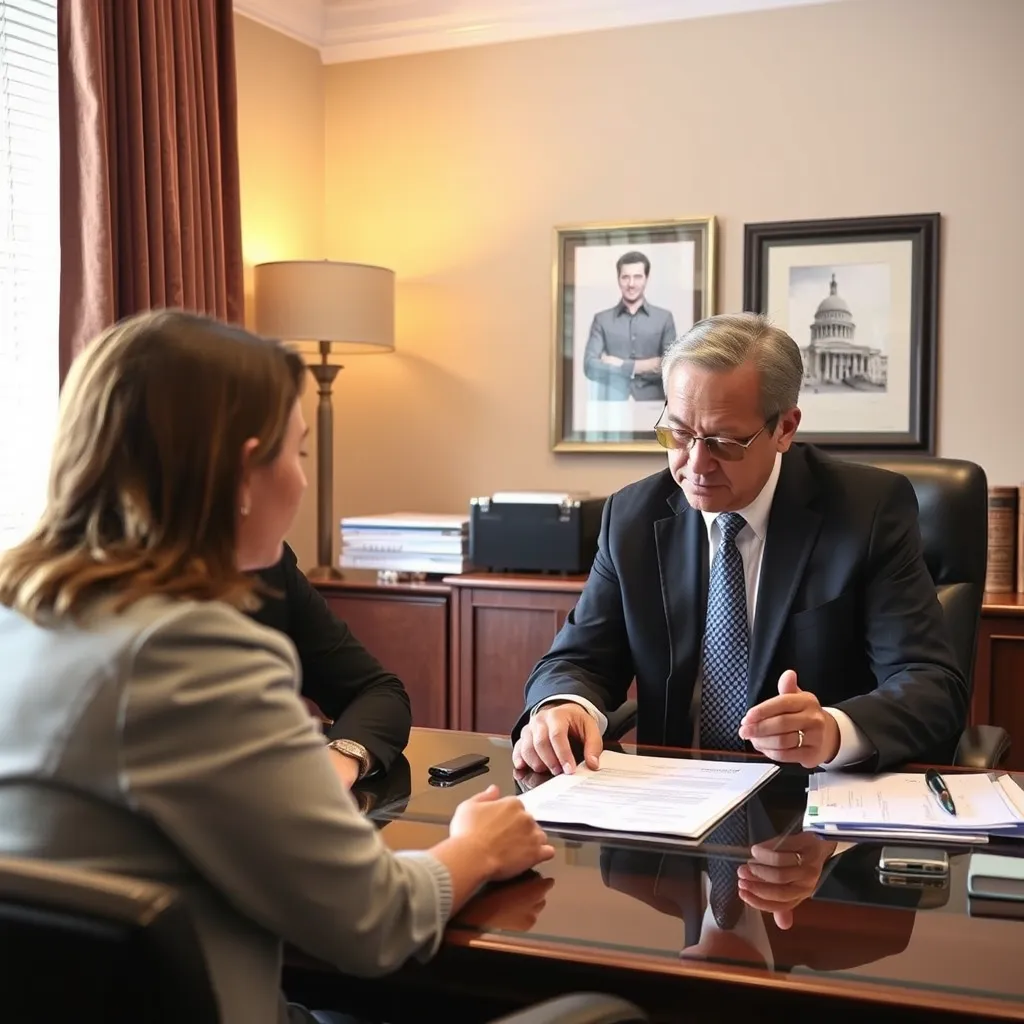
Rehabilitative Alimony Lawyer Fairfax, VA
Rehabilitative alimony serves a specific purpose under Virginia law: to provide a dependent spouse with the financial support necessary to obtain education, training, or work experience so that the spouse can become self-sufficient. In Fairfax, Virginia, these matters are heard in the Fairfax County Circuit Court, where Mr. Sris and the firm’s Of Counsel attorneys bring extensive experience in family law to every case. Whether you are seeking rehabilitative alimony or responding to a request for support, the approach the court takes can significantly influence your financial future. Law Offices Of SRIS, P.C. Concentrates its practice on family law matters and represents clients throughout Fairfax County and the surrounding communities, including Burke, Centreville, Chantilly, Herndon, Reston, McLean, Vienna, Tysons, Oakton, Springfield, Annandale, and Falls Church. To request a consultation, reach our firm at (888) 437-7747.
What Rehabilitative Alimony Means in Fairfax, Virginia
Rehabilitative alimony is a form of spousal support designed to enable a spouse to gain the skills or credentials needed to enter or re-enter the workforce. Under Va. Code § 20-107.1, the court considers a range of statutory factors when determining whether to award rehabilitative support, the amount, and the duration. The concept is forward-looking: the support is intended to fund a defined plan—such as a degree program, vocational certificate, or other training—that will equip the recipient to become economically independent. Fairfax County Circuit Court is the court of jurisdiction for spousal support matters filed alongside a divorce or as a standalone petition when jurisdiction exists. In practice, the court evaluates the realistic feasibility of the proposed rehabilitation plan and the paying spouse’s ability to contribute, balancing the needs of both parties.
In Fairfax County, family law matters that involve support often intersect with equitable distribution and, when children are present, child support and custody. The Fairfax County Juvenile and Domestic Relations District Court handles standalone custody and support orders, but Circuit Court retains authority over divorce-related support, including rehabilitative alimony. The statutory factors in § 20-107.1 cover the earning capacity, education, and training of each spouse; the duration of the marriage; the standard of living established during the marriage; the contributions of each spouse to the family and to the other’s career; and the needs of each party, among other considerations. A party seeking rehabilitative alimony should be prepared to present a concrete, well-documented plan that demonstrates the steps necessary to achieve self-sufficiency and the estimated timeline. The firm’s attorneys work with clients to develop such plans and to present them effectively to the court.
How Mr. Sris and the Firm’s Of Counsel Attorneys Handle Rehabilitative Alimony Cases
When representing a spouse who is requesting rehabilitative alimony, the firm focuses on building a comprehensive record that connects the proposed rehabilitation plan to the statutory factors. This often involves gathering evidence of the spouse’s current earning capacity, the cost and duration of the proposed education or training program, and the likely post-rehabilitation income. Mr. Sris and the firm’s Of Counsel attorneys also address the payor’s financial resources and any counterarguments regarding the feasibility of the plan. In cases where the firm represents the spouse from whom support is requested, the approach shifts to evaluating whether the plan is reasonable, whether the requesting spouse has an existing capacity to earn without further support, and whether the payor’s own financial obligations make the requested award impracticable.
The process generally begins with a thorough consultation to understand the client’s circumstances and objectives. Depending on whether a divorce is pending, the issue of rehabilitative alimony may be raised in the initial complaint or in a subsequent pendente lite motion. Discovery—including interrogatories, document requests, and depositions—helps clarify the relevant facts. The court expects clear, organized presentation; the firm’s attorneys prepare clients for each stage, from settlement negotiations to trial if necessary. Because rehabilitative alimony often involves vocational assessments and financial experienced attorney analysis, the firm works with qualified professionals when a case requires that level of support. Throughout the matter, the goal is to achieve a resolution that respects the client’s financial and personal priorities while complying with Virginia’s statutory framework.
About Mr. Sris and the Firm’s Of Counsel Attorneys
Mr. Sris, Owner and Founder of Law Offices Of SRIS, P.C., established the firm in 1997 and concentrates his practice on family law, criminal defense, and immigration matters. A former prosecutor, Mr. Sris draws on trial experience to advise clients in contested cases and settlement discussions. He testified before the Virginia House Courts of Justice Committee in support of 2019 HB 635 (chief patron Del. David Bulova). Mr. Sris is admitted to practice in Virginia, Maryland, the District of Columbia, New Jersey, and New York. He personally oversees the family law practice and works closely with the firm’s Of Counsel attorneys on matters involving rehabilitative alimony, spousal support, and equitable distribution.
The firm’s Of Counsel attorneys bring additional depth to family law representation. The collective experience includes backgrounds in prosecution, law enforcement, and complex litigation. This range of perspectives allows the firm to approach rehabilitative alimony cases with insight into how financial evidence is developed, how opposing arguments can be anticipated, and how to present a case persuasively to the court. The firm handles family law matters in Fairfax County and throughout Northern Virginia, with a focus on personalized service and thorough preparation. To discuss your situation, contact Law Offices Of SRIS, P.C. at (888) 437-7747.
Frequently Asked Questions
What is rehabilitative alimony in Virginia?
Rehabilitative alimony is a type of spousal support ordered to help a dependent spouse obtain the education, training, or work experience needed to become self-supporting. Under Va. Code § 20-107.1, a Virginia court may award rehabilitative alimony for a defined period and tied to a specific plan. The court considers factors such as the length of the marriage, each spouse’s earning capacity, contributions to the family, and the standard of living during the marriage. The goal is to provide temporary support while the recipient works toward economic independence, after which the support typically terminates.
How does the court decide whether to grant rehabilitative alimony?
The court evaluates the statutory factors in Va. Code § 20-107.1 and the specific rehabilitation plan presented by the requesting spouse. The judge will consider whether the spouse seeking support has a realistic need for further education or training, whether the planned program is likely to lead to meaningful employment, and whether the paying spouse has the financial ability to provide the support. The court may also consider the marital standard of living, contributions each spouse made to the other’s career, and any other circumstances the court deems relevant. The decision is fact-intensive and varies from case to case.
Can rehabilitative alimony be modified in Virginia?
Yes, rehabilitative alimony may be modified if there has been a material change of circumstances, unless the original order or a property settlement agreement expressly precludes modification. A material change might include a significant shift in either party’s income, a change in the recipient’s ability to become self-sufficient, or a change in the payor’s ability to pay. A modification petition is filed in the Circuit Court that issued the original order. The firm’s attorneys can assess whether a change in circumstances might support a request for modification. For guidance on your specific situation, reach Law Offices Of SRIS, P.C. at (888) 437-7747.
How long does rehabilitative alimony last?
Rehabilitative alimony is typically ordered for a defined period linked to the anticipated duration of the training or education program that the recipient will complete. The court sets a time frame based on evidence of how long the program will take and when the recipient is expected to achieve self-sufficiency. Once the period expires, the obligation generally ends unless the recipient can show good cause for an extension. The specific duration will depend on the facts of the case and the court’s assessment of the rehabilitation plan’s feasibility.
Do I need a lawyer for a rehabilitative alimony case in Fairfax?
While you are not legally required to have a lawyer, rehabilitative alimony cases involve detailed financial evidence and statutory factors that are often complex to navigate without representation. An attorney can help develop a clear rehabilitation plan, gather the necessary documentation, and advocate for a fair outcome in negotiations or at trial. In Fairfax County, cases are heard in the Fairfax County Circuit Court, and familiarity with local procedures can affect how smoothly a case proceeds. To discuss the details of your matter, contact Law Offices Of SRIS, P.C. at (888) 437-7747.
What should I bring to my initial consultation about rehabilitative alimony?
For an initial consultation, it is helpful to bring any information about your education, work history, current income, and the training or education you are considering, as well as your spouse’s financial information if you have it. Relevant documents may include tax returns, pay stubs, a description of the program you plan to pursue and its cost, and any correspondence or agreements related to spousal support. A detailed summary of your marriage, including contributions to the household and to your spouse’s career, also assists the attorney in evaluating your case. The firm will advise you on any additional documentation that may be needed as your matter progresses.
For additional information about family law matters in nearby localities, please see:
Family Law Attorney Fairfax County, Virginia •
Family Law Lawyer Falls Church, Virginia •
Family Law Lawyer Prince William County, Virginia •
Family Law Attorney Manassas, Virginia
Authoritative resources:
Virginia Code Title 20 (Domestic Relations) •
Virginia’s Court System
Attorney advertising. Prior results do not guarantee a similar outcome.
Results may vary.
Case results depend on a variety of factors unique to each case.