
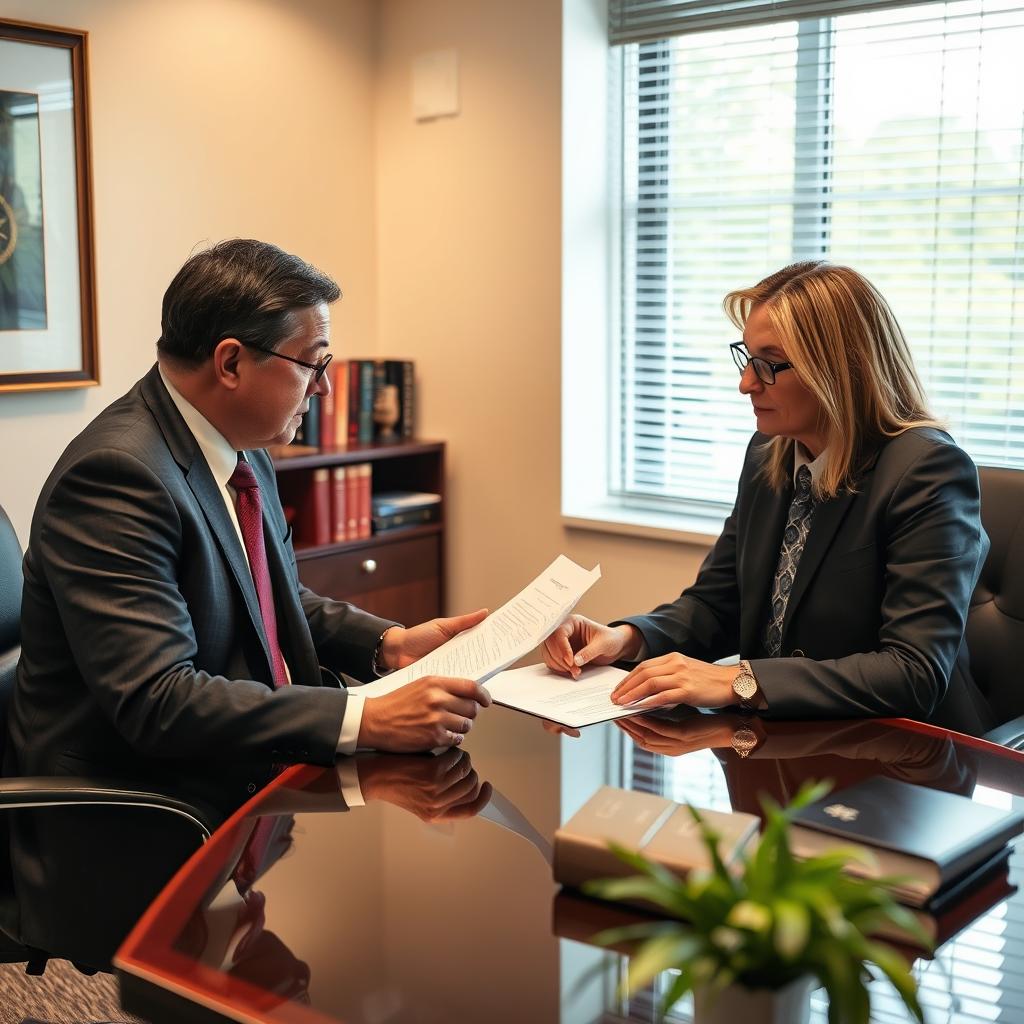
Property Division Lawyer Fairfax County, VA
When a marriage ends in Fairfax County, one of the most significant and often contested issues is the division of property. Virginia follows the principle of equitable distribution under Va. Code § 20‑107.3, which means marital assets and debts are not automatically split 50/50—they are divided in a manner the court deems fair. The Fairfax County Circuit Court, located at the courthouse off Chain Bridge Road, has exclusive jurisdiction over divorce and the equitable distribution of property. Matters of custody or support that may involve property-related financial disclosures are heard in the Fairfax County Juvenile and Domestic Relations Court. Mr. Sris and his Of Counsel at Law Offices Of SRIS, P.C. Concentrate their practice on representing clients in complex property division matters, from high‑net‑worth marital estates to the valuation of professional practices and retirement accounts. For a consultation, reach the firm at (888) 437‑7747.
Law Offices Of SRIS, P.C. – Advocacy Without Borders.
What Property Division Means in Fairfax County, Virginia
Property division in a Fairfax County divorce follows the same equitable distribution framework that governs the entire Commonwealth, but the practical realities of Northern Virginia—high real‑estate values, significant government and technology‑sector employment, and an international workforce—make these cases factually complex. Under Va. Code § 20‑107.3, the Circuit Court must first classify all property as marital, separate, or hybrid (part marital and part separate). The court then values each asset and distributes the marital estate according to eleven statutory factors, including the monetary and non‑monetary contributions of each spouse, the duration of the marriage, the ages and health of the parties, and the circumstances that led to the dissolution of the union.
Fairfax County is the state’s most populous jurisdiction, and its domestic‑relations docket reflects the area’s demographic breadth. Equitable distribution cases frequently involve the division of federal‑government retirement accounts (FERS, CSRS, TSP), military pensions under the Uniformed Services Former Spouses’ Protection Act, stock options and restricted stock units from private‑sector employers, and closely held businesses. The court may also consider the tax consequences of a proposed division and may order a monetary award to supplement an in‑kind distribution. Because the Circuit Court retains broad discretion, presenting a clear and well‑documented picture of the marital estate is essential. Mr. Sris and his Of Counsel work with forensic accountants, business valuators, and QDRO attorney when necessary to assist the court in reaching an equitable result.
How Mr. Sris and His Of Counsel Handle Property Division Cases
The firm approaches equitable distribution matters with a thorough, document‑intensive preparation that begins at the client‑intake stage. Clients are asked to assemble financial statements, tax returns, account statements, deed and title records, and any prenuptial or postnuptial agreements. Mr. Sris and his Of Counsel then analyze the classification of each asset and debt under Virginia law, distinguishing between marital and separate property, tracing the source of funds, and identifying any claims for commingling or transmutation. This classification step often determines the entire trajectory of a case, because separate property is not subject to division.
Once classification is complete, the focus shifts to valuation and negotiation. In some circumstances, a mediated settlement through a written separation agreement can resolve the division of property without a trial. In contested cases, the firm prepares the matter for a full equitable‑distribution hearing before the Fairfax County Circuit Court, presenting evidence on value, tracing, and the statutory factors. Throughout the process, Mr. Sris and his Of Counsel draw on extensive combined legal experience between Mr. Sris and his Of Counsel. Results may vary.
About Mr. Sris and the Firm’s Of Counsel Attorneys
Mr. Sris, Owner and Founder of Law Offices Of SRIS, P.C., has concentrated his practice on family law since the firm’s founding in 1997. He appears regularly in the Fairfax County Circuit Court and the J&DR Court and has handled equitable‑distribution matters involving complex marital estates, including those with business interests, international assets, and retirement‑account valuations. Mr. Sris testified before the Virginia House Courts of Justice Committee in support of 2019 HB 635 (chief patron Del. David Bulova). He is admitted in Virginia, Maryland, the District of Columbia, New Jersey, and New York.
The firm’s Of Counsel attorneys bring additional experience in local courts and in related areas such as business law and forensic analysis, which often intersect with high‑value property division. Together, Mr. Sris and the firm’s Of Counsel attorneys work to protect the financial interests of clients throughout Fairfax County, Burke, Centreville, Chantilly, Herndon, Reston, McLean, Vienna, Tysons, Oakton, Springfield, Annandale, and the greater Falls Church area. All meetings are by appointment; consultations are available at (888) 437‑7747.
Frequently Asked Questions
What is equitable distribution in a Virginia divorce?
Equitable distribution is a court‑ordered division of marital property based on fairness, not a strict 50/50 split. Virginia is not a community‑property state. The Fairfax County Circuit Court classifies assets as marital, separate, or hybrid under Va. Code § 20‑107.3, values them, and then divides the marital share according to eleven statutory factors, including each spouse’s contributions and the duration of the marriage. The goal is to reach a division that the court deems equitable rather than a mathematically equal split. For personalized guidance, contact Law Offices Of SRIS, P.C. at (888) 437‑7747.
What kind of property is subject to division in a Fairfax County divorce?
Generally, only marital property—assets and debts acquired during the marriage by either spouse—is subject to equitable distribution. Separate property, such as property owned before the marriage or received as a gift or inheritance, is typically not divided. However, when separate and marital funds are commingled, the asset can become hybrid, and tracing becomes critical. The Fairfax County Circuit Court has exclusive jurisdiction to classify and divide property under Va. Code § 20‑107.3. Mr. Sris and his Of Counsel routinely address classification disputes involving real estate, retirement accounts, and business interests in Fairfax County.
How does the court value a business or professional practice in a divorce?
The court may consider expert testimony from forensic accountants or business valuators to determine the fair market value of a business or practice. Under Virginia law, if a business was started during the marriage or increased in value because of marital effort, the increase may be marital property. The Fairfax County Circuit Court examines financial records, tax returns, and market‑comparable data. Because valuation is often the most contested issue in a property‑division case, working with experienced professionals is important.
Can property division be resolved without going to trial in Fairfax County?
Yes, spouses can negotiate a property settlement agreement (separation agreement) that resolves all issues without a court hearing. A comprehensive separation agreement, signed by both parties, can govern the division of assets, debts, and any spousal support, and it can be incorporated into a final divorce decree. Even when the parties are in disagreement, mediation can help reach a resolution. The firm represents clients in both negotiated settlements and contested equitable‑distribution trials in the Fairfax County Circuit Court.
Do I need a lawyer for property division if my divorce is uncontested?
While not legally required, having an experienced lawyer to draft or review a separation agreement helps ensure the division is thorough and legally enforceable. Uncontested divorces in Virginia still require the court to approve the agreement and confirm that the division is equitable. The Fairfax County Circuit Court will review the agreement during a short hearing. Mr. Sris and his Of Counsel can assist in preparing the necessary documents and appearing at the prove‑up hearing. For a consultation, reach Law Offices Of SRIS, P.C. at (888) 437‑7747.
Attorney advertising. Prior results do not guarantee a similar outcome. Results may vary.
Case results depend on a variety of factors unique to each case.