
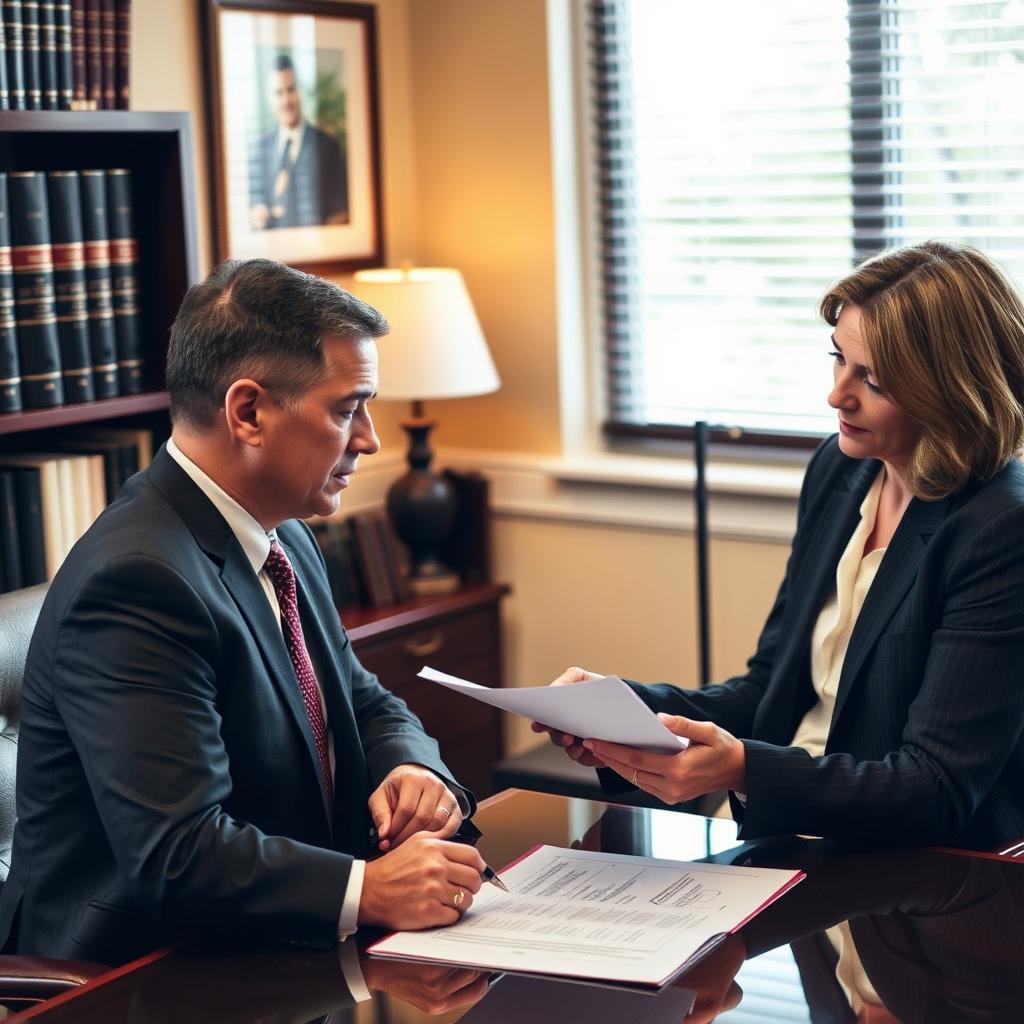
Marital Settlement Agreement Lawyer Fairfax County, VA
Negotiating the terms of a marital settlement agreement in Fairfax County requires a firm understanding of Virginia’s equitable distribution laws and the procedural expectations of the Fairfax County Circuit Court. At Law Offices Of SRIS, P.C., Mr. Sris and his Of Counsel team assist clients across Fairfax County—including Fairfax, Burke, Centreville, Chantilly, Herndon, Reston, McLean, Vienna, and surrounding communities—with the drafting, review, and enforcement of marital settlement agreements that protect their financial interests and parental rights. Whether the agreement resolves property division, spousal support, child custody, or all three, our attorneys focus on building durable, court-enforceable agreements that reflect each client’s priorities. To discuss a marital settlement agreement matter in Fairfax County, reach Law Offices Of SRIS, P.C. at (888) 437-7747. Law Offices Of SRIS, P.C. – Advocacy Without Borders.
What a Marital Settlement Agreement Means in Fairfax County
A marital settlement agreement, often called a property settlement agreement or separation agreement, is a written contract between spouses that resolves the issues arising from the dissolution of their marriage. In Fairfax County, these agreements are governed by Virginia Code § 20‑109 and the equitable distribution framework of § 20‑107.3. Because Virginia is not a community property state, the court divides marital property fairly but not necessarily equally, applying statutory factors that consider each spouse’s contributions, the duration of the marriage, and the circumstances that led to the divorce.
Marital settlement agreements in Fairfax County may address the division of real estate, retirement accounts, business interests, vehicles, and debts. They can also establish spousal support under § 20‑107.1 and, when appropriate, incorporate child custody and visitation arrangements consistent with the trusted‑interests factors in § 20‑124.3. Once signed by both parties, these agreements carry substantial legal weight. The Fairfax County Circuit Court—which has exclusive original jurisdiction over divorce proceedings under § 20‑96—may incorporate the agreement into a final divorce decree, making its terms enforceable by the court’s contempt powers. The Fairfax County Juvenile and Domestic Relations District Court may also be involved when custody, visitation, or child support issues are part of the agreement.
Because of the financial and personal stakes, careful drafting is critical. An agreement that is ambiguous, incomplete, or procedurally defective can lead to costly litigation long after the divorce is finalized. Mr. Sris and his Of Counsel team work with clients to ensure that the marital settlement agreement accurately reflects the parties’ understanding, complies with Virginia statutory requirements, and is formatted for acceptance by the Fairfax County courts.
How Mr. Sris and His Of Counsel Handle Marital Settlement Agreement Cases
When a client engages Law Offices Of SRIS, P.C. for a marital settlement agreement matter in Fairfax County, the process begins with a thorough consultation during which Mr. Sris or an Of Counsel attorney listens to the client’s goals and explains the legal framework that applies under Virginia law. Our attorneys identify all marital and separate property, assess income streams and tax implications, and discuss custody factors if children are involved. This fact‑gathering stage helps shape the negotiation strategy, whether the agreement is being worked out through counsel‑to‑counsel discussions, mediation, or direct negotiation between the parties.
Once the substantive terms are settled, the agreement is drafted with precise language that conforms to Virginia’s statutory requirements and the local practice preferences of the Fairfax County Circuit Court. The agreement is then reviewed by both parties—often with each spouse represented by separate counsel—before execution. In uncontested divorces, a properly executed marital settlement agreement can streamline the final hearing, because the court may grant a divorce on the no‑fault ground of six‑month separation under § 20‑91(9)(b) when the parties have a signed agreement and no minor children, or after a one‑year separation in other cases. Where a dispute arises over the validity or meaning of a previously signed agreement, the firm also represents clients in post‑divorce enforcement or modification proceedings in the Fairfax County courts.
About Mr. Sris and His Of Counsel Team
Mr. Sris, Owner and Founder of Law Offices Of SRIS, P.C., has practiced law since 1997 and is admitted in Virginia, Maryland, the District of Columbia, New Jersey, and New York. A former prosecutor, he brings a litigator’s perspective to marital settlement agreement negotiations, assessing each case for the evidentiary and procedural issues that could arise if an agreement later needs court enforcement. Mr. Sris testified before the Virginia House Courts of Justice Committee in support of 2019 HB 635 (chief patron Del. David Bulova), a bill that revised Virginia’s equitable distribution statute. That experience informs his understanding of how Virginia family law statutes operate in practice.
Mr. Sris and his Of Counsel team bring extensive combined legal experience. Results may vary. The firm’s Of Counsel attorneys are non‑employee lawyers engaged through Excella, each with substantial background in family law, litigation, and related fields. Together, they provide clients in Fairfax County with the benefit of multiple legal perspectives while maintaining a single point of contact through the firm’s Fairfax location. Every marital settlement agreement matter receives focused attention, with the goal of producing a clear, enforceable contract that protects the client’s interests and reduces the risk of future litigation.
Frequently Asked Questions About Marital Settlement Agreements in Fairfax County
What is a marital settlement agreement in Virginia?
A marital settlement agreement is a written contract between spouses that resolves all financial and custodial issues arising from divorce, including property division, spousal support, and if applicable, child custody and visitation. In Virginia, these agreements are authorized under Va. Code § 20‑109 and are commonly used to settle equitable distribution matters without a trial. Once signed and, where required, incorporated into a final decree by the Fairfax County Circuit Court, the agreement becomes a binding court order. A well‑drafted agreement can save significant time and expense compared to litigating each issue separately.
Do I need a lawyer to draft a marital settlement agreement in Fairfax County?
You are not legally required to hire a lawyer to draft a marital settlement agreement in Virginia, but doing so helps ensure the agreement is comprehensive, enforceable, and protective of your rights. Marital settlement agreements involve complex financial matters, tax considerations, and statutory requirements that are not always apparent to a layperson. If an agreement is later challenged for ambiguity, unconscionability, or inadequate disclosure, a court may set it aside. Working with an experienced family law attorney familiar with Fairfax County court practices can reduce the risk of costly post‑divorce disputes.
Can a marital settlement agreement be modified after the divorce?
Property division and spousal support provisions in a marital settlement agreement are generally final and cannot be modified unless the agreement itself reserves the right to modify them or both parties consent. However, provisions concerning child custody, visitation, and child support are always modifiable based on a material change in circumstances and the child’s best interests. The Fairfax County Juvenile and Domestic Relations District Court typically handles modification requests for child‑related matters. To discuss whether a specific agreement term can be modified, reach Law Offices Of SRIS, P.C. at (888) 437-7747.
What happens if one spouse violates the marital settlement agreement?
If one spouse fails to comply with a marital settlement agreement that has been incorporated into a court order, the other spouse may file an enforcement action in the Fairfax County Circuit Court or, for child‑related violations, in the Juvenile and Domestic Relations District Court. The court can use its contempt power to compel compliance, award attorney’s fees, and impose sanctions. Enforcement actions often require a showing that the violation was willful and that a valid order exists. Prompt action is important, as delay can complicate enforcement. For guidance on a specific enforcement situation, contact Mr. Sris and his Of Counsel at (888) 437-7747.
How is a marital settlement agreement different from a separation agreement?
A marital settlement agreement is a type of separation agreement that specifically resolves all issues arising from the marriage in contemplation of divorce, while a separation agreement may be a broader category that includes agreements that do not immediately lead to divorce. In Virginia, both terms are often used interchangeably. The critical point is that the agreement must be in writing and signed by both parties to be enforceable. If you are considering a separation or preparing to file for divorce in Fairfax County, reach Law Offices Of SRIS, P.C. at (888) 437-7747 to discuss which document best fits your circumstances.
How does the Fairfax County Circuit Court handle marital settlement agreements?
The Fairfax County Circuit Court reviews marital settlement agreements during the divorce proceeding and, if the agreement meets statutory requirements, incorporates it into the final divorce decree. The court must find that the agreement is fair, equitable, and not the product of fraud, duress, or overreaching. In uncontested divorces, a properly drafted agreement can streamline the final hearing and reduce the need for extensive testimony. The court’s local procedural expectations, including formatting and notarization requirements, are something an experienced family law attorney can navigate.
For additional family law resources in Northern Virginia, visit our pages on Family Law Lawyer Prince William County, Family Law Lawyer Loudoun County, and Family Law Lawyer Arlington County.
Relevant primary sources: Virginia Code § 20‑109 (Property settlement agreements) and Fairfax County Circuit Court.
Attorney advertising. Prior results do not guarantee a similar outcome. Results may vary.
Case results depend on a variety of factors unique to each case.