
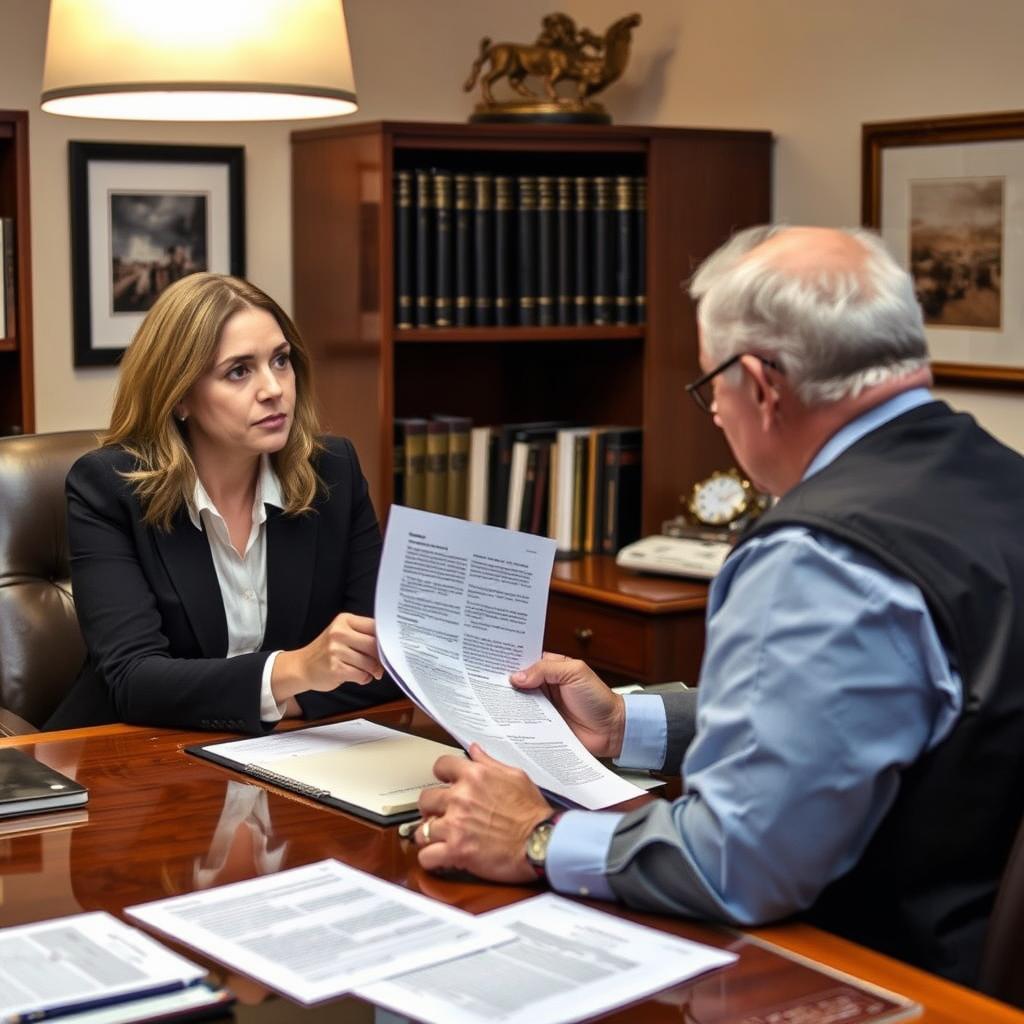
International Assets Divorce Lawyer Manassas, VA
When a marriage crosses international borders, untangling finances and property when the relationship ends can become particularly complex. For individuals in Manassas, Virginia, and the surrounding area, a divorce involving assets held overseas—such as foreign bank accounts, real estate abroad, business interests in another country, or retirement accounts governed by non‑U.S. Law—requires careful handling to ensure that all marital property is identified, properly valued, and divided in accordance with Virginia’s equitable distribution laws. Mr. Sris, Owner and Founder of Law Offices Of SRIS, P.C., and his Of Counsel represent clients with international asset concerns in the Manassas courts. Reach the firm at (888) 437‑7747 to request a consultation. Law Offices Of SRIS, P.C. – Advocacy Without Borders.
What International Assets Divorce Means in Manassas
A divorce that involves assets located outside the United States adds layers of legal and practical difficulty to an already challenging process. Virginia is an equitable distribution state, not a community property state. Under Va. Code § 20‑107.3, the circuit court classifies property as marital, separate, or hybrid, then divides the marital estate fairly—though not necessarily equally—after considering the statutory factors. When assets exist overseas, several additional questions arise: whether the foreign country’s laws affect the asset’s classification or transferability, how to obtain reliable financial records from abroad, and whether a Virginia judgment dividing foreign property can be enforced internationally.
In Manassas, divorce, equitable distribution, and spousal support matters are heard in the Manassas Circuit Court, located at 9311 Lee Avenue, Suite 230. Standalone custody, visitation, and child support disputes go to the Manassas Juvenile and Domestic Relations District Court. Mr. Sris and his Of Counsel appear in both courts on behalf of clients whose family law matters have international dimensions. Whether the couple owns vacation property in Europe, holds investment accounts in Asia, or operates a family business registered abroad, the Manassas courts can reach that property under Virginia law, though practical enforcement often calls for coordination with foreign legal professionals.
Virginia requires that at least one spouse be a resident and domiciliary of the Commonwealth for six months before filing for divorce. The grounds for divorce may be no‑fault—after a separation period of either six months (with a signed separation agreement and no minor children) or one year—or fault‑based, including adultery, cruelty, or desertion. The international character of the assets does not change these foundational Virginia requirements, but it can affect strategy around discovery, valuation, and negotiation of a property settlement agreement.
How Mr. Sris and His Of Counsel Handle International Assets Divorce Cases
An international assets divorce demands a thorough approach to discovery. Mr. Sris and his Of Counsel work to identify all marital property—whether held domestically or overseas—and to determine its classification under Va. Code § 20‑107.3. When necessary, the legal team collaborates with forensic accountants, business valuation professionals, and foreign law attorneys to trace assets, assess their worth, and evaluate any foreign legal restrictions that could influence distribution in the Virginia proceeding.
The equitable distribution analysis considers factors such as the duration of the marriage, each spouse’s contributions to the acquisition and care of marital property, and the circumstances that led to the breakdown of the marriage. For a spouse who may be concerned about hidden or undervalued international holdings, Virginia procedural tools—including interrogatories, requests for production, and depositions—can be deployed to obtain documents and testimony, though cross‑border discovery may require additional steps. Mr. Sris’s legislative experience—he testified before the Virginia House Courts of Justice Committee in support of 2019 HB 635 (chief patron Del. David Bulova), which revised provisions of § 20‑107.3 concerning retirement and deferred compensation plans—reflects a longstanding commitment to the equitable treatment of complex marital estates. Working with the Of Counsel team, Mr. Sris seeks negotiated settlements when possible, while preparing each case as if it will proceed to trial. Results may vary.
About Mr. Sris and His Of Counsel Team
Mr. Sris is Owner and Founder of Law Offices Of SRIS, P.C., a multi‑state firm that has been serving clients since 1997. A former prosecutor, Mr. Sris is admitted to practice in Virginia, Maryland, the District of Columbia, New Jersey, and New York. He concentrates his practice on complex family law matters, including divorces involving international assets and high‑net‑worth estates. His role as a witness before the Virginia House Courts of Justice Committee in support of 2019 HB 635 demonstrates a hands‑on understanding of the state’s equitable distribution framework.
Mr. Sris is supported by a team of Of Counsel attorneys who bring substantial litigation experience across multiple practice areas. The collective background includes time in prosecution, law enforcement, and child welfare proceedings, contributing a practical perspective to each case. Together, Mr. Sris and his Of Counsel handle family law matters in the Manassas courts, assisting clients with the identification, valuation, and fair division of marital property that spans international boundaries. Because the firm maintains a Fairfax location, clients in Manassas and the surrounding communities can schedule appointments at a nearby place convenient for them.
Frequently Asked Questions
What is an international assets divorce?
An international assets divorce is a divorce proceeding in which one or both spouses own property, financial accounts, business interests, or other assets that are located or governed by law outside the United States. The Virginia court has authority to classify and divide marital property wherever it is situated, but the cross‑border nature of the assets can complicate discovery, valuation, and enforcement. Proper handling of an international assets divorce requires an understanding of both Virginia equitable distribution principles and the practical steps needed to gather information and secure assets that may be subject to foreign legal systems.
How does Virginia divide overseas property in a divorce?
Virginia treats overseas property the same as domestic property for purposes of classification and equitable distribution, provided the court has personal jurisdiction over the parties and in rem jurisdiction over the marriage. Under Va. Code § 20‑107.3, the circuit court determines whether an asset is marital or separate, values it, and then distributes the marital portion after weighing the statutory factors. The fact that an asset is held in another country does not remove it from the court’s reach under Virginia law, but a U.S. Order may need to be recognized or enforced abroad through the foreign country’s legal process.
What should I bring to a consultation about an international divorce?
You should bring any available financial records that list assets owned by either spouse, including foreign account statements, deeds to real property abroad, business registration documents, and recent tax returns filed in any jurisdiction. Also useful are copies of any existing prenuptial or postnuptial agreements, information about the marriage itself (date and place of marriage, country of residence), and a summary of your understanding of the marital property. Even partial records help Mr. Sris and his Of Counsel begin assessing which assets may be subject to Virginia’s equitable distribution.
Can a spouse hide international assets during a Virginia divorce?
A spouse may attempt to conceal assets held in foreign jurisdictions, but Virginia law provides discovery tools to uncover hidden marital property. Interrogatories, requests for production of documents, and depositions can be used to probe financial holdings. When international records are involved, Mr. Sris and his Of Counsel often coordinate with forensic accountants and foreign legal professionals to trace transactions, locate accounts, and challenge incomplete disclosures. A court may also draw adverse inferences if a party fails to cooperate in discovery.
How long does an international assets divorce take in Manassas?
The timeline for an international assets divorce in Manassas varies depending on factors such as asset complexity, cooperation between the parties, and whether custody or support issues are also contested. An uncontested case with a signed separation agreement can move through the Manassas Circuit Court relatively efficiently after the required separation period has elapsed; contested matters requiring extensive discovery abroad and valuation of international holdings generally take longer. Mr. Sris and his Of Counsel work to manage discovery efficiently, but each case’s pace is shaped by its own facts.
Do I need a lawyer for an international divorce in Manassas?
While no law requires you to hire a lawyer, an international assets divorce involves legal and logistical challenges that make experienced legal guidance important. Identifying overseas property, understanding how foreign law may affect the Virginia court’s orders, and ensuring that the final decree protects your rights often require a coordinated effort among family law attorneys, forensic experts, and international counsel. Mr. Sris and his Of Counsel provide that coordination and advocate for an equitable outcome in the Manassas courts.
Related resources: Fairfax County family law attorney · Manassas Park family law representation · Prince William County divorce lawyer · Arlington family law attorney · Loudoun County divorce representation
Virginia legal information: Virginia Code Title 20 (Domestic Relations) · Virginia Judicial System
Attorney advertising. Prior results do not guarantee a similar outcome.
Case results depend on a variety of factors unique to each case.