
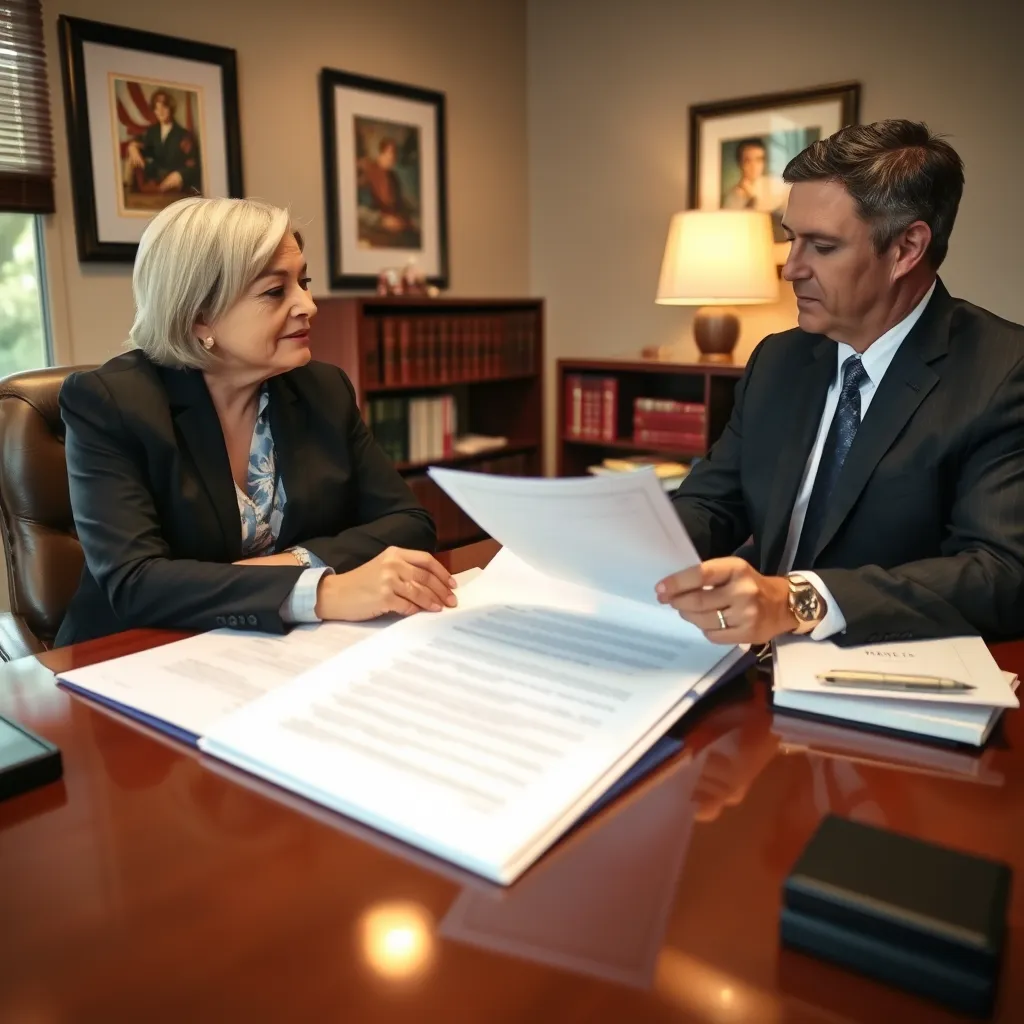
Foreign Divorce Decree Enforcement Lawyer Falls Church, VA
When a divorce is finalized in another country, Virginia courts do not automatically recognize or enforce the foreign decree. Parties seeking to divide assets located in Virginia, modify support obligations, or exercise custody rights must first domesticate the foreign judgment through the Falls Church Circuit Court. Mr. Sris and the firm’s Of Counsel attorneys concentrate on cross-border family law matters, assisting clients with the domestication and enforcement of foreign divorce decrees throughout Northern Virginia. Whether the decree was issued in a Hague Convention country or a non-signatory jurisdiction, establishing its validity under Virginia’s comity standards requires a thorough understanding of both international private law and local procedural rules. The firm’s Fairfax location represents clients at the Falls Church courts, including the Circuit Court at 300 Park Avenue, Suite 151W, Falls Church, VA 22046. To discuss your specific enforcement matter, reach Law Offices Of SRIS, P.C. at (888) 437-7747. Law Offices Of SRIS, P.C. – Advocacy Without Borders.
Enforcing a Foreign Divorce Decree in Falls Church, Virginia
Virginia law does not automatically give effect to a divorce decree issued abroad. The party seeking enforcement must petition the Circuit Court of the appropriate city or county—here, Falls Church Circuit Court—to register and domesticate the foreign judgment. Virginia courts apply the doctrine of comity: a foreign decree is recognized if the issuing court had proper jurisdiction, the judgment is final under the laws of the issuing country, and enforcement does not contravene Virginia public policy. The court examines whether due process was afforded to both parties and whether the foreign proceedings meet fundamental fairness standards.
For residents of Falls Church and surrounding communities, domesticating a foreign divorce decree frequently involves navigating intersecting financial disclosure requirements and equitable distribution principles. Under Va. Code § 20‑107.3, Virginia is an equitable distribution state, meaning marital property is divided fairly—not necessarily equally. When a foreign decree omits property located in Virginia or does not address spousal support in a way enforceable under Virginia law, a separate domestication action becomes essential. The firm’s Of Counsel attorneys evaluate the decree for compliance with Virginia’s statutory framework, identify any gaps in enforcement, and prepare the necessary pleadings to register the foreign order. Because service of process must comply with both Virginia rules and any applicable international treaty obligations—such as the Hague Service Convention—the procedural path is tailored to the originating country and the specific facts of the matter.
How Mr. Sris and the Firm’s Of Counsel Attorneys Handle Foreign Decree Enforcement
The process typically begins with a review of the foreign divorce decree, the marital settlement agreement if one exists, and any related custody or support orders. The firm’s attorneys determine whether the decree is entitled to comity and, if so, prepare a domestication petition to file with the Falls Church Circuit Court. The petition requests that the Virginia court recognize the foreign decree as its own judgment, thereby allowing enforcement through Virginia’s contempt, garnishment, and property-division mechanisms.
When a foreign decree is contested, the firm represents clients in evidentiary hearings where the authenticity of foreign documents, the jurisdiction of the issuing court, and any public-policy objections are examined. Mr. Sris and the firm’s Of Counsel attorneys work to present certified translations, apostille‑authenticated records from Hague‑convention countries, and expert testimony on foreign law where necessary. Throughout the proceeding, the goal remains straightforward: to secure a Virginia order that mirrors the terms of the foreign decree so that child support, spousal maintenance, property distribution, and custody arrangements are enforceable in the Commonwealth.
About Mr. Sris and the Firm’s Of Counsel Attorneys
Mr. Sris, Owner and Founder of Law Offices Of SRIS, P.C., has practiced law since 1997 and is admitted in Virginia, Maryland, the District of Columbia, New Jersey, and New York. A former prosecutor, Mr. Sris testified before the Virginia House Courts of Justice Committee in support of 2019 HB 635 (chief patron Del. David Bulova). His multi‑state practice gives him a broad perspective on the interplay between foreign judgments and domestic enforcement mechanisms.
The firm’s Of Counsel attorneys bring extensive collective legal experience to cross‑border family law matters, including the domestication of foreign divorces, enforcement of international support orders, and recognition of custody decrees. Mr. Sris and the firm’s Of Counsel have documented case results across multiple practice areas since 1997. Results may vary. The firm’s Fairfax location serves clients throughout Northern Virginia, including those appearing in the Falls Church courts.
Frequently Asked Questions
Do I need a Virginia lawyer to enforce my foreign divorce decree in Falls Church?
You are not legally required to hire a lawyer, but domesticating a foreign divorce decree involves complex procedural and evidentiary requirements that often benefit from the guidance of an experienced attorney. The Falls Church Circuit Court requires a properly filed petition that meets Virginia’s standards for comity, including proof that the foreign court had jurisdiction and that due process was observed. Errors in documentation or procedural missteps can delay enforcement or result in dismissal, making legal assistance a practical consideration for most people seeking to enforce property division, support, or custody terms from an overseas divorce.
How does a Virginia court decide whether to recognize my foreign divorce decree?
Virginia courts apply the doctrine of comity: they will recognize a foreign divorce decree if the issuing court had proper jurisdiction, the decree is final under that country’s laws, and enforcement does not violate Virginia public policy. The Falls Church Circuit Court examines factors such as whether both parties received adequate notice and an opportunity to be heard, whether the foreign proceedings were fundamentally fair, and whether the decree addresses matters—such as equitable distribution of Virginia‑situated property—in a way that can be reconciled with Virginia law. When the decree is from a country that is party to the Hague Apostille Convention, authenticated documents may ease the evidentiary burden, but the underlying comity analysis remains the same.
What if the other party refuses to cooperate with enforcement in Falls Church?
If the opposing party contests the domestication action, the matter proceeds to an evidentiary hearing before the Falls Church Circuit Court. At the hearing, the party seeking enforcement presents evidence—often including certified copies of the foreign decree, translations, and, if needed, expert testimony on foreign law—to establish that the decree meets Virginia’s comity requirements. The court resolves disputes over the authenticity of documents, the jurisdictional basis of the foreign proceeding, and any claimed public‑policy objections. Once the court enters an order domesticating the decree, refusal to comply can be addressed through Virginia’s contempt and enforcement mechanisms just as with any domestic court order.
Can a foreign divorce decree that divides property located in Virginia be enforced?
Yes, a foreign decree that identifies and divides Virginia‑situated property can be enforced after domestication, provided the decree does not conflict with Virginia’s equitable distribution statutes. Falls Church Circuit Court will examine whether the foreign court’s property division aligns with the principles in Va. Code § 20‑107.3. If the foreign decree is silent on Virginia property or the division contravenes Virginia public policy, the domestication action may also involve a request for the Virginia court to classify and divide the marital assets located within the Commonwealth. In such instances, the foreign decree serves as evidence of the dissolution but the property distribution is determined under Virginia law.
Does the nationality of the parties affect enforcement of a foreign divorce in Virginia?
The nationality of the parties does not, by itself, determine whether a foreign divorce decree will be recognized in Virginia; the decisive factors are the foreign court’s jurisdiction and the decree’s finality. However, matters involving parties who hold citizenship in a country that is not a signatory to the Hague Service Convention or the Hague Apostille Convention may require additional steps for service of process and authentication of documents. The Falls Church Circuit Court will apply the same comity standard regardless of the parties’ nationalities, focusing on due process and the substantive fairness of the foreign proceeding.
Mr. Sris and the firm’s Of Counsel attorneys have documented case results across multiple practice areas since 1997.
Source: Case results maintained by Law Offices Of SRIS, P.C. Case Results
Reviewed by Mr. Sris, admitted in VA/MD/DC/NJ/NY.
Explore additional family law resources for the Northern Virginia area:
Family Law Lawyer Fairfax County |
Family Law Lawyer Fairfax City |
Family Law Lawyer Prince William County |
Family Law Lawyer Manassas |
Family Law Lawyer Manassas Park
For official Virginia court information and forms, visit Virginia’s Judicial System. The Falls Church Circuit Court website is available at Falls Church Circuit Court. The Virginia Code section on equitable distribution can be reviewed at Va. Code § 20‑107.3.
Attorney advertising. Prior results do not guarantee a similar outcome. Case results depend on a variety of factors unique to each case. Results may vary.