
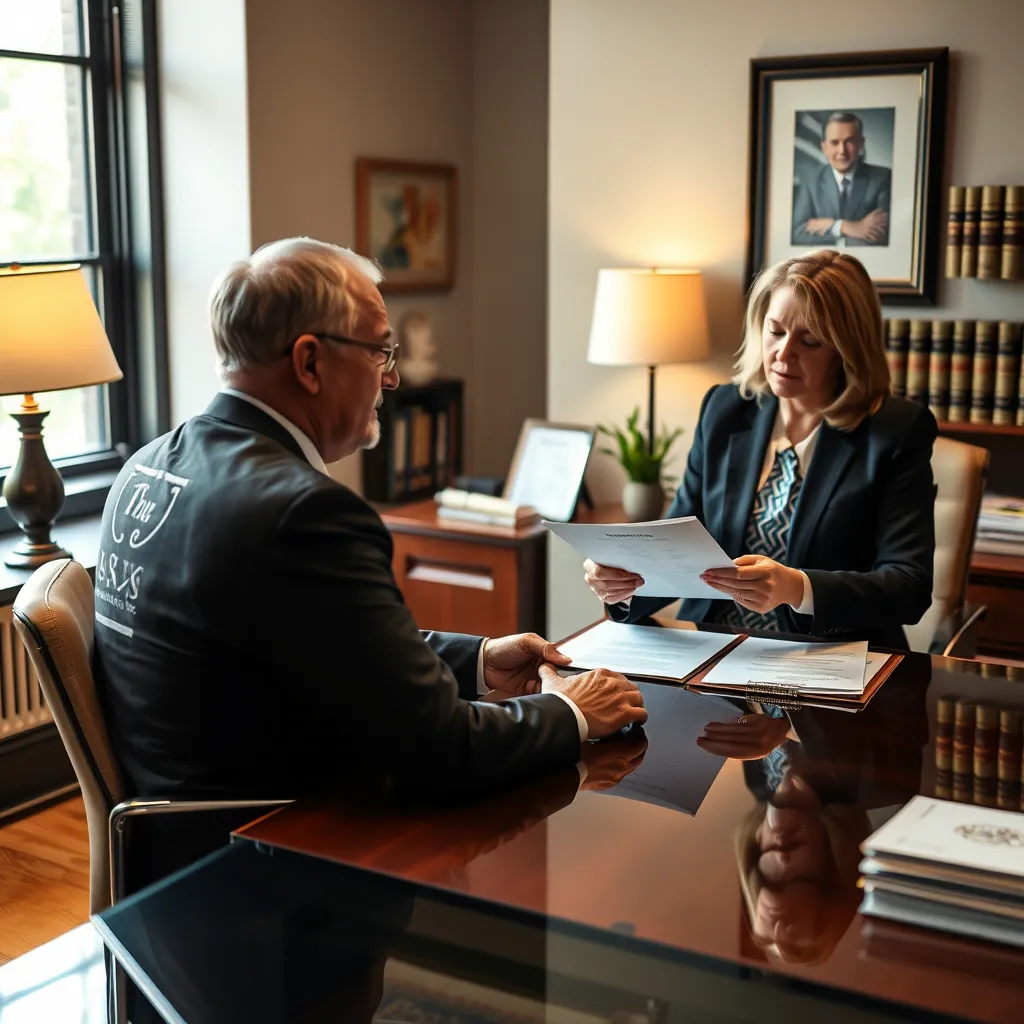
Equitable Distribution Lawyer Falls Church, VA
Equitable distribution is the legal process Virginia courts use to divide marital property when a marriage ends. Unlike community property states that split assets 50/50, Virginia divides property fairly—though not necessarily equally—based on a list of statutory factors. Falls Church (City) Circuit Court, located at 300 Park Avenue, Suite 151W, hears all divorce and equitable distribution matters for Falls Church residents. Virginia Code § 20‑107.3 controls how the court classifies, values, and ultimately distributes property. Whether a couple owns a house, retirement accounts, a business, or complex investment holdings, classification as marital or separate property drives the outcome. Mr. Sris and the firm’s Of Counsel attorneys represent individuals in equitable distribution cases throughout Northern Virginia, including Falls Church. The firm’s attorneys work to protect each client’s financial interests while advocating for a fair division under the law. For a consultation, reach Law Offices Of SRIS, P.C. at (888) 437‑7747. Law Offices Of SRIS, P.C. – Advocacy Without Borders.
What Equitable Distribution Means in Falls Church, Virginia
In Virginia, marital property generally includes any asset acquired during the marriage, regardless of whose name is on the title. Separate property—assets owned before the marriage, gifts, or inheritances—remains with the original owner. The Falls Church Circuit Court applies an equitable, not equal, standard when dividing marital property. The judge weighs 11 statutory factors: each spouse’s contributions to the family and the acquisition of assets, the length of the marriage, the age and health of both parties, the reasons the marriage ended, and tax consequences, among others. A spouse who contributed as a homemaker or supported the other’s career may still receive a significant share even without income-producing employment. Because Falls Church is a small independent city and its Circuit Court shares resources with the Seventeenth Judicial District, local practice emphasizes well-prepared financial disclosures and clear property classification. Ancillary matters such as spousal support and attorney fees can also be addressed in the same proceeding.
The court’s power to distribute property extends to retirement plans, stock options, business interests, and professional practices. Valuing these assets often requires working with forensic accountants or business appraisers. The timeline for an equitable distribution case depends on whether the divorce is contested. An uncontested divorce with a signed separation agreement can often conclude in two to six months after filing; a contested divorce with disputed property issues may take nine to 18 months or longer, especially when business valuations or international assets are involved. Our firm helps clients gather the financial records needed to present a complete picture to the court.
How Mr. Sris and the Firm’s Of Counsel Attorneys Handle Equitable Distribution Cases
Mr. Sris and the firm’s Of Counsel attorneys focus on protecting their client’s financial standing while moving the case toward resolution. The process begins with identifying all marital and separate property, which may include real estate, bank accounts, retirement plans, stock portfolios, and business ownership stakes. The attorneys then work to establish the correct valuation date and, when necessary, engage financial professionals who can testify about asset worth. Whether negotiating a separation agreement that resolves property division or litigating a contested distribution at the Falls Church Circuit Court, the firm prepares each case as if it will go to trial.
Because Virginia law does not mandate a 50/50 split, presenting evidence on the 11 statutory factors is central to the strategy. The firm’s approach leverages its experience in family law and, where relevant, Mr. Sris’s background as a former prosecutor to examine financial disclosures and challenge inflated or hidden asset claims. The attorneys also coordinate with tax advisors to help the client understand the long-term financial impact of a proposed distribution. Throughout the proceeding, the firm’s attorneys keep the client informed of key deadlines and court scheduling in Falls Church.
About Mr. Sris and the Firm’s Of Counsel Attorneys
Mr. Sris is Owner and Founder of Law Offices Of SRIS, P.C., a multi-state firm practicing since 1997. A former prosecutor, he now represents clients in family law matters across Virginia, including Falls Church. In 2019, he testified before the Virginia House Courts of Justice Committee in support of HB 635 (chief patron Del. David Bulova), which revised the equitable distribution statute, Va. Code § 20‑107.3. He is admitted in Virginia, Maryland, the District of Columbia, New Jersey, and New York.
The firm’s Of Counsel attorneys bring extensive experience in family law and appear alongside Mr. Sris on equitable distribution matters in Falls Church and throughout Northern Virginia. Their combined work covers property classification, valuation, separation agreements, and contested litigation at the Circuit Court level. Together, the firm’s attorneys help clients navigate the financial dimensions of divorce while protecting assets accumulated over the course of the marriage.
Frequently Asked Questions
What is equitable distribution in Virginia?
Equitable distribution is the court-supervised process of dividing marital property fairly—though not necessarily equally—when a marriage ends in Virginia. Under Virginia Code § 20‑107.3, the court first classifies assets as separate, marital, or hybrid. It then determines the value of each item and applies 11 statutory factors to decide how to divide the marital estate. Those factors include the duration of the marriage, each spouse’s monetary and non-monetary contributions, the reason for the divorce, and tax consequences. The court may order one spouse to pay the other a monetary award to make the overall division equitable. For guidance on your specific situation, reach Law Offices Of SRIS, P.C. at (888) 437‑7747.
Is Virginia a community property state?
No, Virginia is an equitable distribution state, not a community property state. In community property states (such as California or Texas), marital assets are typically split 50/50. Virginia courts divide property based on fairness after weighing the 11 factors in Virginia Code § 20‑107.3. This means a judge may award one spouse more than half the marital property depending on the circumstances. Falls Church Circuit Court is the venue for all divorce and property division cases in the city. To discuss the details of your matter, contact Law Offices Of SRIS, P.C. at (888) 437‑7747.
How long does a divorce take in Falls Church, Virginia?
An uncontested divorce in Falls Church typically resolves within two to six months after filing; a contested divorce with property disputes often takes nine to 18 months or more. The timeline depends on whether the parties have signed a separation agreement and whether minor children are involved. Virginia requires a separation period—six months with a signed agreement and no minor children, or one year in other no-fault cases—before a no-fault divorce can be final. Contested equitable distribution can extend the case, especially when business valuations or expert testimony are required. For a consultation, reach Mr. Sris and the firm’s Of Counsel attorneys at (888) 437‑7747.
How much does a divorce cost in Falls Church, Virginia?
Costs vary, but the Falls Church Circuit Court filing fee for a divorce complaint is approximately $86; other expenses include service of process, attorney fees, and experienced attorney costs. Sheriff service of process may cost about $12, while private process servers charge $50 to $100. If child custody is disputed, a guardian ad litem may be appointed, with fees typically ranging from $500 to $2,500 or more. Mediation, which is available but not mandatory, generally costs $100 to $300 per hour per party. These expenses are separate from legal fees, which depend on case complexity. To discuss how fees may apply to your situation, contact Law Offices Of SRIS, P.C. at (888) 437‑7747.
What are the grounds for divorce in Virginia?
Virginia allows both no-fault and fault-based divorce grounds. No-fault divorce requires a separation period: one year, or six months if the couple has no minor children and has signed a separation agreement. Fault grounds include adultery (which has no waiting period), cruelty, willful desertion or abandonment for one year, and a felony conviction resulting in imprisonment of more than one year. Adultery can affect spousal support and property division. All divorce and equitable distribution matters in Falls Church are heard in the Falls Church Circuit Court. For a consultation, reach Law Offices Of SRIS, P.C. at (888) 437‑7747.
For additional guidance in neighboring jurisdictions, visit our pages on Fairfax County family lawyer, Fairfax (City) family lawyer, Prince William County family lawyer, and Manassas (City) family lawyer.
Primary legal authority includes Virginia Code § 20‑107.3 (Equitable distribution) and the Falls Church General District and Circuit Courts official site.
Attorney advertising. Prior results do not guarantee a similar outcome. Results may vary.
Case results depend on a variety of factors unique to each case.