
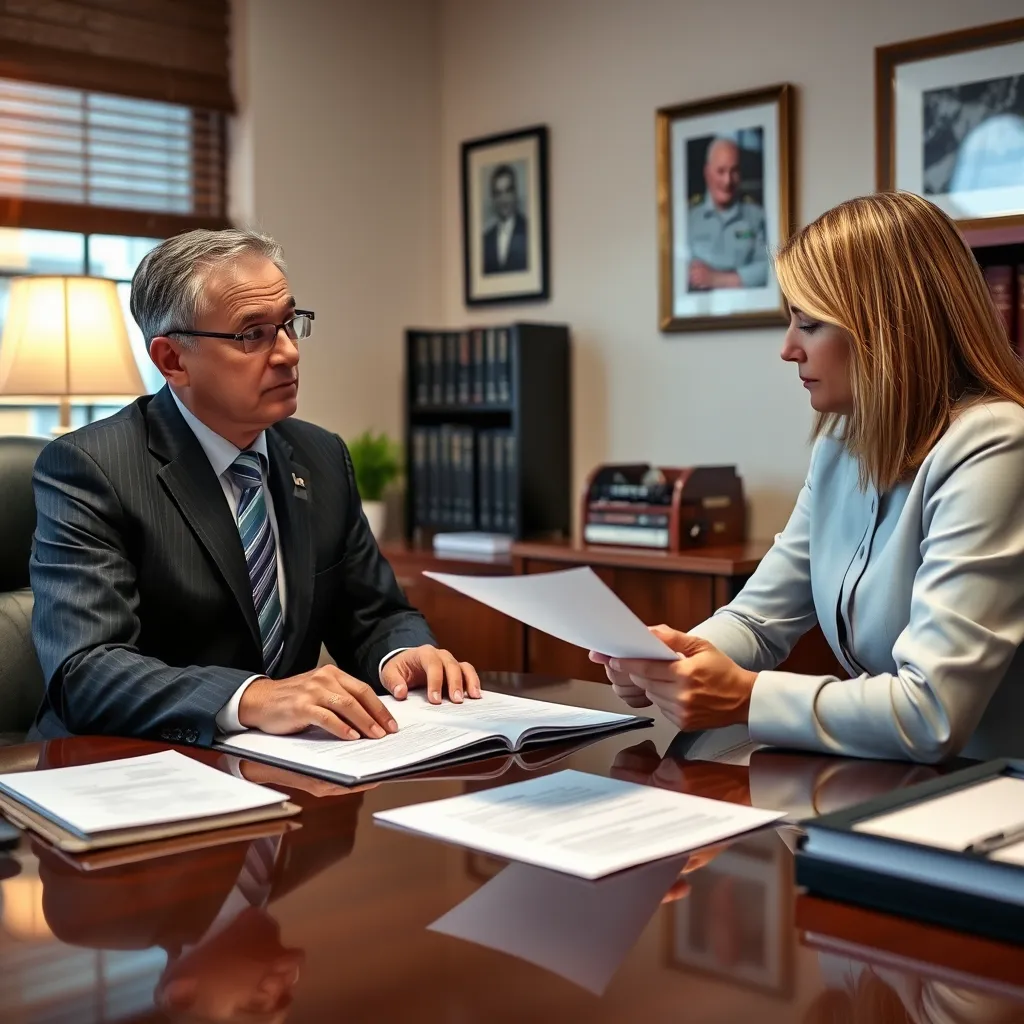
Armed Forces Divorce Lawyer Fairfax, VA
Military families in Fairfax face unique legal considerations when a marriage ends. The intersection of Virginia family law and federal military statutes creates a framework that differs in important ways from a civilian divorce. At Law Offices Of SRIS, P.C., Mr. Sris and his Of Counsel bring extensive combined legal experience to armed forces divorce matters, including issues involving the Servicemembers Civil Relief Act (SCRA), division of military retired pay, child custody during deployment, and jurisdiction requirements. India is not a signatory to the 1980 Hague Convention on Civil Aspects of International Child Abduction. The firm serves clients at the Fairfax County Circuit Court and the Fairfax County Juvenile and Domestic Relations District Court, where divorce, equitable distribution, custody, and support matters are heard. Whether you are an active-duty service member stationed at Fort Belvoir or the Pentagon, a reservist, or a military spouse, understanding your rights under both Virginia law and federal protections is critical. To discuss your circumstances with an experienced attorney, reach Law Offices Of SRIS, P.C. at (888) 437-7747. Results may vary. Law Offices Of SRIS, P.C. – Advocacy Without Borders.
What Armed Forces Divorce Means in Fairfax, Virginia
Fairfax, with its proximity to Washington, D.C., and major military installations, is home to a substantial population of active-duty personnel, reservists, and retired service members. An armed forces divorce in this locality involves the same Virginia statutory framework as any other divorce—the grounds, property division, custody, and support provisions of Title 20 of the Virginia Code—but with the addition of federal statutes that protect service members and govern certain military benefits. The Fairfax County Circuit Court has exclusive original jurisdiction over divorce actions under Virginia Code § 20-96, while custody and support matters may be heard in the Juvenile and Domestic Relations District Court. For a military member or spouse, establishing Virginia residency as required by Virginia Code § 20-97 is often straightforward given a permanent duty station in the area, but questions can arise when deployments or temporary assignments complicate domicile.
One of the most significant federal protections is the SCRA, which can allow a service member to request a stay of civil court proceedings if military duties materially affect the ability to appear. This does not prevent a divorce from proceeding; it may delay it while the service member is on active duty. The SCRA also imposes specific rules for default judgments against absent service members. Additionally, the Uniformed Services Former Spouses’ Protection Act (USFSPA) authorizes Virginia courts to divide military disposable retired pay as marital property, provided certain jurisdictional requirements are met. Under Virginia Code § 20-107.3, the court applies equitable distribution factors to classify and divide all marital assets, including military pensions and Thrift Savings Plan accounts. A fair division of these benefits often requires careful valuation and coordination with the Defense Finance and Accounting Service (DFAS). Because Virginia is an equitable distribution state, not a community property state, the court divides marital property based on what is fair after considering statutory factors, not simply a 50-50 split. The presence of a military pension can make the property division more complex, and an attorney who understands both the state and federal layers can help you pursue a favorable outcome.
How Mr. Sris and His Of Counsel Handle Armed Forces Divorce Cases
Mr. Sris and his Of Counsel approach each armed forces divorce with a clear focus on the federal and state rules that apply. The process begins by confirming jurisdiction and residency, because a Virginia court must have proper authority over the parties and the marriage. Once jurisdiction is established, the team identifies the marital property, including any military retired pay that has accrued during the marriage. The valuation of this asset is often a critical issue; the length of the marriage relative to the service member’s years of creditable service, known as the “marital fraction,” is a key factor under the USFSPA and Virginia case law.
The firm works to manage the procedural complexities that can arise from a service member’s deployment or training schedule. If a stay under the SCRA is appropriate, Mr. Sris and his Of Counsel ensure that the request is properly filed and that the opposing party is treated fairly under the statute. Child custody and visitation arrangements in military families require particular attention, as a deployment or permanent change of station order can disrupt existing parenting plans. Virginia Code § 20-124.3 requires the court to consider the best interests of the child, and Mr. Sris and his Of Counsel advocate for arrangements that account for the realities of military life. Throughout the case, the goal is to reach a settlement when possible and to be prepared for litigation when necessary. Mr. Sris and his Of Counsel have handled matters across multiple practice areas since 1997. Results may vary.
About Mr. Sris and His Of Counsel Team
Mr. Sris, Owner and Founder of Law Offices Of SRIS, P.C., founded the firm in 1997 and practices across Virginia, Maryland, the District of Columbia, New Jersey, and New York. A former prosecutor, he brings insight into courtroom dynamics that benefits clients in contested family law matters. Mr. Sris testified before the Virginia House Courts of Justice Committee in support of 2019 HB 635 (chief patron Del. David Bulova), a bill that revised the equitable distribution statute, Virginia Code § 20-107.3. His understanding of Virginia family law, combined with his multi-jurisdictional practice, allows him to address the cross-border issues that can arise when military families move between states. The Of Counsel team at Law Offices Of SRIS, P.C. Includes attorneys with backgrounds in trial work and litigation, and each brings a practical, focused approach to family law representation.
Mr. Sris and his Of Counsel bring extensive combined legal experience. They serve clients throughout the Fairfax area from the firm’s Fairfax Location, and they are familiar with the procedures of the Fairfax County Circuit Court and the Juvenile and Domestic Relations District Court. The firm’s approach is to keep Mr. Sris’s personal caseload manageable so that each matter receives direct attention. When you work with Law Offices Of SRIS, P.C., you work with a team that is prepared to handle the specific demands of an armed forces divorce, from the initial filing to the final decree. For a consultation, reach Mr. Sris and his Of Counsel at (888) 437-7747.
Frequently Asked Questions
How is an armed forces divorce different from a civilian divorce in Virginia?
An armed forces divorce is governed by the same Virginia divorce statutes, but federal laws such as the Servicemembers Civil Relief Act and the Uniformed Services Former Spouses’ Protection Act add important protections and rules. The SCRA allows a service member to request a delay in court proceedings if military duty prevents participation, and it establishes rules for default judgments. The USFSPA enables state courts to divide military retired pay as marital property, provided certain conditions are met. These federal layers require careful coordination when filing in the Fairfax County Circuit Court. For guidance on your specific situation, reach Law Offices Of SRIS, P.C. at (888) 437-7747.
Does the military pension get divided in a Fairfax, Virginia divorce?
Yes, a military pension can be divided as marital property under Virginia’s equitable distribution law, provided the court has jurisdiction over the service member and the marriage lasted at least ten years overlapping with ten years of creditable service to allow direct payment from DFAS. The Fairfax County Circuit Court applies Virginia Code § 20-107.3 to classify and divide the marital share of the pension. Even if the ten-year overlap is not met, the court may still award a portion of the pension to the former spouse through other means. The valuation of the marital share and the drafting of the final order must comply with federal regulations, and an attorney can help ensure that the order is acceptable to DFAS. To discuss the details of your matter, contact Law Offices Of SRIS, P.C. at (888) 437-7747.
What happens to child custody when a military parent is deployed?
Virginia courts determine custody based on the best interests of the child under Virginia Code § 20-124.3, and they will consider the impact of deployment when fashioning a custody or visitation order. A deployment may require a temporary modification of the parenting plan to account for the service member’s absence. The Fairfax County Juvenile and Domestic Relations District Court has jurisdiction over custody matters, and it can enter orders that provide for virtual visitation, designate a temporary caregiver, and outline the process for resuming the prior schedule upon the parent’s return. Mr. Sris and his Of Counsel work with military families to create plans that are both practical and legally enforceable. Results may vary.
Do I need a lawyer for an armed forces divorce in Fairfax County?
You are not legally required to hire a lawyer for a divorce in Virginia, but the involvement of military benefits and federal statutes makes an armed forces divorce more complex than a standard divorce. An attorney who understands the interplay of Virginia equitable distribution, the SCRA, and the USFSPA can help you avoid mistakes that might delay the case or affect the division of a military pension. The Fairfax County Circuit Court requires proper pleadings and, in uncontested cases, at least one corroborating witness. Mr. Sris and his Of Counsel are experienced in these matters and can assist you at every stage. For a consultation, reach Mr. Sris and his Of Counsel at (888) 437-7747.
Can a military spouse file for divorce in Virginia if the service member is stationed elsewhere?
Yes, if the non-military spouse meets Virginia’s residency requirement—being an actual bona fide resident and domiciliary for at least six months—the divorce may be filed in the Fairfax County Circuit Court even if the service member is stationed out of state. Jurisdiction over the service member may still be established through personal service or, in some cases, under the state’s long-arm statute if the service member has sufficient contacts with Virginia. The SCRA may come into play if the service member is on active duty and unable to respond, but the court can proceed if the service member’s interests are protected. An attorney can advise you on the proper method of service and on seeking a stay if appropriate.
How does the Servicemembers Civil Relief Act affect a divorce in Fairfax?
The SCRA can allow an active-duty service member to request a stay of divorce proceedings for at least 90 days if military service materially affects the ability to appear, and the court may extend the stay if the service remains a hindrance. The act also requires that a plaintiff seeking a default judgment against a service member file an affidavit stating whether the defendant is in military service. In the Fairfax County Circuit Court, this means that when one party is on active duty, the opposing party cannot simply obtain a default judgment without complying with SCRA requirements. Mr. Sris and his Of Counsel handle these procedural safeguards to ensure that the rights of both parties are respected.
Virginia Primary Legal Resources:
Attorney advertising. Prior results do not guarantee a similar outcome. Case results depend on a variety of factors unique to each case. Results may vary.