
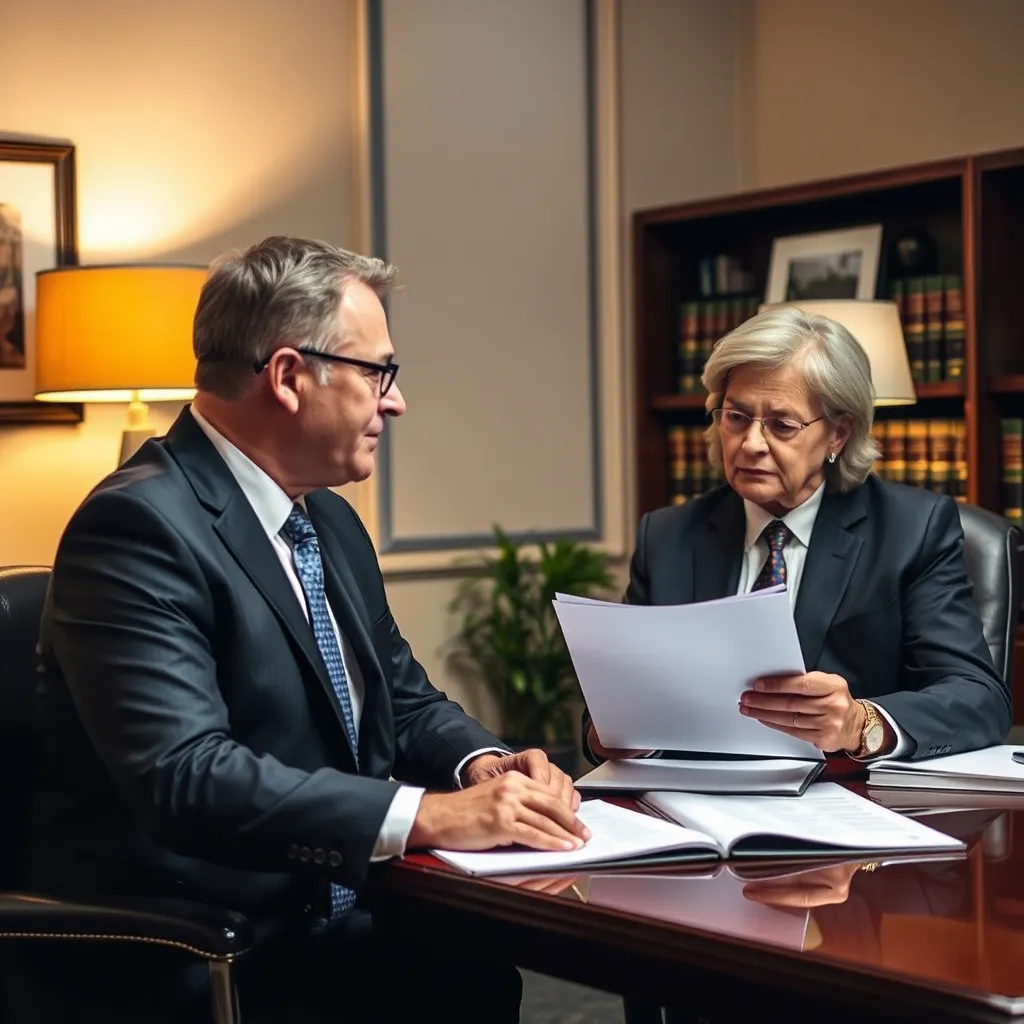
Marital Property Lawyer Fairfax, VA
Property division is often one of the most contested aspects of a divorce. In Virginia, the courts follow the principle of equitable distribution under Va. Code § 20-107.3, which requires a fair—but not necessarily equal—division of marital assets and debts. Disputes over what qualifies as marital property, how it should be valued, and what a fair allocation looks like can complicate even an otherwise straightforward divorce. For residents of Fairfax County and the City of Fairfax, these matters are heard in the Fairfax County Circuit Court at 4110 Chain Bridge Road, Fairfax, or the Fairfax City Circuit Court at 10455 Armstrong Street, Room 101, Fairfax. Mr. Sris, Owner and Founder of Law Offices Of SRIS, P.C., and the firm’s Of Counsel attorneys represent clients in equitable distribution proceedings throughout the Fairfax area. If you need guidance on dividing property in a divorce, reach Law Offices Of SRIS, P.C. at (888) 437-7747 to request a consultation. Law Offices Of SRIS, P.C. – Advocacy Without Borders.
Marital Property Law in Fairfax, Virginia
Virginia classifies property as either marital, separate, or hybrid. Marital property generally includes assets and debts acquired during the marriage by either spouse, regardless of how the property is titled. Separate property—assets owned before the marriage or received during the marriage by gift or inheritance—remains the sole property of the receiving spouse. However, the classification can become nuanced when separate property has been commingled with marital funds or has increased in value due to the efforts of either spouse. Under Va. Code § 20-107.3, the court must classify all property before valuing it and distributing it equitably. The classification phase is critical because it determines what is available for division.
Fairfax County and City courts apply the same statutory framework, but local procedural practices and the specific judges’ approaches can influence how a case unfolds. The Fairfax County Circuit Court hears all divorce and equitable distribution matters for the county, while the Fairfax City Circuit Court handles cases arising within the city limits. Both courts require a detailed presentation of financial records, including real estate appraisals, business valuations, retirement account statements, and debt documentation. Marital property can include the family home, investment accounts, stock options, professional practices, vehicles, and retirement benefits. Disputes often arise over the characterization of assets, especially when one spouse owned a business before the marriage or when a significant inheritance was deposited into a joint account. In such cases, forensic accountants and business valuation attorneys are frequently engaged to trace the origin of funds and provide a reliable valuation.
The court considers eleven statutory factors when determining an equitable distribution, including each spouse’s contributions to the well-being of the family, the duration of the marriage, the age and health of the parties, and the circumstances and factors that contributed to the dissolution of the marriage. Because the judge has broad discretion, experienced legal counsel can help present the financial picture and relevant factors in a way that supports a fair outcome. For residents of communities like Burke, Centreville, Chantilly, Herndon, Reston, McLean, Vienna, Tysons, Oakton, Springfield, Annandale, and Falls Church, the Fairfax Location of Law Offices Of SRIS, P.C. is a convenient place to meet with counsel and prepare for court proceedings.
How Mr. Sris and the Firm’s Of Counsel Attorneys Handle Marital Property Cases
Mr. Sris and the firm’s Of Counsel attorneys take a thorough approach to marital property disputes, beginning with a careful review of each party’s financial disclosures. They work to identify all assets and debts, determine their marital or separate character, and assess the most appropriate valuation methods. In cases involving complex assets—such as a closely held business, professional practice, or multiple real estate holdings—the firm collaborates with forensic accountants and appraisers to develop accurate valuations. The goal is to ensure that the court has a complete and accurate financial picture before making any determination.
Many marital property disputes can be resolved through negotiation or mediation, which often reduces the time and expense of litigation. The firm’s attorneys represent clients in settlement discussions and, when an agreement is possible, draft property settlement agreements that reflect the parties’ understanding. If a case requires court intervention, Mr. Sris and the firm’s Of Counsel attorneys appear before the Fairfax County Circuit Court or Fairfax City Circuit Court to present evidence and argue for a fair division under the statutory factors. While every case is different, the firm’s focus is on protecting the client’s financial interests and helping them move forward after the divorce. For matters that also involve child custody or support, those issues may be addressed separately in the Fairfax County Juvenile and Domestic Relations District Court or Fairfax City Juvenile and Domestic Relations District Court, but the property division itself remains in the Circuit Court.
About Mr. Sris and the Firm’s Of Counsel Attorneys
Mr. Sris, Owner and Founder of Law Offices Of SRIS, P.C., is a former prosecutor who has practiced law since 1997. He is admitted in Virginia, Maryland, the District of Columbia, New Jersey, and New York. Mr. Sris testified before the Virginia House Courts of Justice Committee in support of 2019 HB 635 (chief patron Del. David Bulova). His thorough understanding of Virginia statutory law, including the equitable distribution statute, informs his approach to marital property cases. Mr. Sris concentrates his practice on family law, criminal defense, and related matters that require strategic planning and courtroom experience.
The firm’s Of Counsel attorneys bring additional depth to family law representation. The team includes a former Maryland Assistant State’s Attorney and a former Virginia State Trooper, each of whom contributes a practical, litigation-focused perspective. Together, Mr. Sris and the firm’s Of Counsel attorneys provide experienced representation to individuals facing property division issues in Fairfax County and throughout Northern Virginia. For a consultation about your specific marital property matter, reach Law Offices Of SRIS, P.C. at (888) 437-7747.
Frequently Asked Questions
Is Virginia a community property state?
Virginia is not a community property state; it follows the equitable distribution model. Under Va. Code § 20-107.3, the court divides marital property fairly based on eleven statutory factors, not necessarily equally. Separate property—such as assets owned before the marriage or received by gift or inheritance—remains with the owning spouse. Fairfax County and City Circuit Courts apply these principles in every divorce case. For guidance on how equitable distribution applies to your situation, reach Law Offices Of SRIS, P.C. at (888) 437-7747.
How does the court divide property in a Fairfax, Virginia divorce?
The court first classifies all assets as marital, separate, or hybrid, then values the marital property, and finally divides it equitably. The eleven statutory factors under Va. Code § 20-107.3 guide the division. These factors include each spouse’s contributions to the family, the duration of the marriage, and the circumstances experienced to the divorce. The Fairfax County Circuit Court or Fairfax City Circuit Court has jurisdiction. Because the judge has discretion, presenting a well-organized financial case is important. To discuss the details of your matter, contact Law Offices Of SRIS, P.C. at (888) 437-7747.
What assets are typically divided in a Virginia divorce?
Most assets acquired during the marriage are subject to division, including real estate, bank accounts, retirement funds, investments, business interests, and vehicles. Debts incurred during the marriage are also allocated. Separate property—gifts, inheritances, and pre-marital assets—is generally not divided but may be considered when determining an equitable distribution. Complex assets such as stock options, professional practices, and international holdings require careful valuation. For a consultation about your specific assets, reach Mr. Sris and the firm’s Of Counsel attorneys at (888) 437-7747.
Can we decide how to divide our property without going to court?
Yes, many couples resolve property division through a signed property settlement agreement, which the court can incorporate into the final divorce decree. Mediation or direct negotiations between attorneys can produce an agreement that addresses all assets and debts. If both parties voluntarily agree on a fair division, they avoid the uncertainty and expense of a trial. However, each spouse should still have independent legal counsel to ensure the agreement protects their rights. To discuss your options, reach Law Offices Of SRIS, P.C. at (888) 437-7747.
What should I do if I think my spouse is hiding assets?
If you suspect hidden assets, you should promptly inform your attorney, who can investigate through formal discovery tools such as interrogatories, requests for production of documents, and depositions. Forensic accountants can trace funds and uncover concealed accounts or undervalued property. The court can consider a spouse’s failure to fully disclose assets when making its distribution decision. Early identification of hidden assets is critical. For guidance on your specific situation, reach Law Offices Of SRIS, P.C. at (888) 437-7747.
Do I need a lawyer for marital property division in Fairfax?
While you are not required to hire a lawyer, property division involves complex legal classifications, valuation methods, and statutory factors that can significantly affect your financial future. An attorney can help you identify all marital and separate property, ensure proper valuation, and advocate for a fair distribution. Representing yourself in a contested property case carries substantial risk. For a consultation, contact Law Offices Of SRIS, P.C. at (888) 437-7747.
Related Practice Areas: Family Law Lawyer Fairfax County | Family Law Lawyer Falls Church | Family Law Lawyer Prince William County | Family Law Lawyer Manassas
Virginia Primary Sources: Virginia Code Title 20 (Domestic Relations) | Fairfax Circuit Court | Virginia Legislative Information System
Attorney advertising. Prior results do not guarantee a similar outcome. Results may vary. Engaging Law Offices Of SRIS, P.C. Requires a signed engagement agreement. The attorneys at Law Offices Of SRIS, P.C. are licensed to practice in Virginia, Maryland, the District of Columbia, New Jersey, and New York. The firm’s Fairfax Location is at 4008 Williamsburg Court, Fairfax, VA 22032. By appointment only. Call (888) 437-7747 to schedule.
Case results depend on a variety of factors unique to each case.