
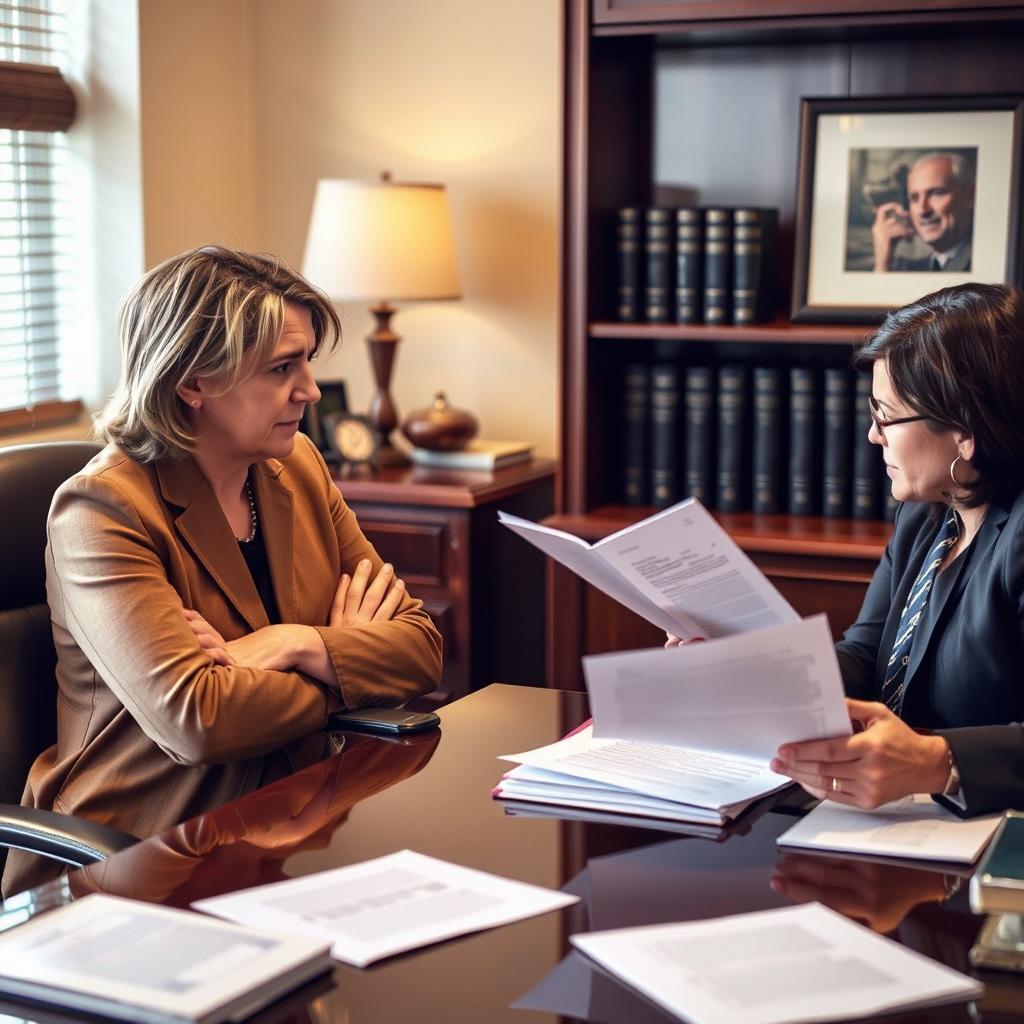
Rehabilitative Alimony Lawyer Fairfax County, VA
Rehabilitative alimony is a form of spousal support designed to provide a dependent spouse with the financial resources and time needed to acquire education, training, or work experience so they can become self‑supporting after a divorce. Unlike permanent support, rehabilitative alimony is finite—it is intended to bridge a gap, not sustain a former spouse indefinitely. Under Virginia law, specifically Va. Code § 20‑107.1, the Fairfax County Circuit Court has the authority to order rehabilitative alimony as part of a divorce or separate maintenance proceeding. Mr. Sris and the firm’s Of Counsel attorneys appear regularly in the Fairfax County Circuit Court and understand how local judges weigh the statutory factors in these matters. If you need guidance on whether rehabilitative alimony may be sought or opposed in your case, reach Law Offices Of SRIS, P.C. at (888) 437‑7747 for a consultation. Law Offices Of SRIS, P.C. – Advocacy Without Borders.
What Rehabilitative Alimony Means in Fairfax County
In every Virginia divorce, the question of spousal support is resolved under Va. Code § 20‑107.1. The statute gives the court authority to order maintenance and support for either spouse and specifies that the award may be paid in a lump sum, in periodic payments, or for a defined duration. When the court orders support for a limited period with the purpose of enabling the recipient to enter or re‑enter the workforce, the award is called rehabilitative alimony.
Because Fairfax County is a high‑cost, high‑opportunity region, the local bench often focuses on the concrete steps a recipient spouse can realistically take. The Fairfax County Circuit Court, located at 4110 Chain Bridge Road in Fairfax, hears all requests for spousal support that arise in a divorce. A judge may examine the length of the marriage, the standard of living established during the marriage, the ages and health of both parties, and the specific educational or vocational plan that the requesting spouse proposes. While there is no fixed formula, the court looks for a plausible path to financial independence within a reasonable time. Mr. Sris and the firm’s Of Counsel attorneys work with clients to present a clear, evidence‑based picture of what that path looks like—or to challenge a plan that is unrealistic or unnecessary.
How Mr. Sris and the Firm’s Of Counsel Attorneys Handle Rehabilitative Alimony Cases
Whether you are the spouse seeking support or the one being asked to pay, the approach begins with a thorough assessment of the family’s financial circumstances. The firm’s attorneys gather tax returns, pay stubs, employment histories, and educational records to understand each spouse’s earning capacity. When appropriate, they consult vocational attorneys who can provide an opinion on the recipient spouse’s employability, the training needed, and the time frame required to become self‑sufficient. This experienced attorney analysis often becomes the foundation for negotiating a settlement or arguing the case before the court.
The firm emphasizes preparation over posturing. In Fairfax County, where many cases settle through negotiation or mediation, the ability to credibly support your position with documentation frequently leads to a better result than attempting to force a trial. When litigation is necessary, Mr. Sris and the firm’s Of Counsel attorneys have extensive combined legal experience and a working familiarity with the local court’s procedures and expectations. Results may vary. Every rehabilitative‑alimony matter is fact‑driven, and the firm treats each case as a unique problem requiring a tailored solution.
About Mr. Sris and the Firm’s Of Counsel Attorneys
Mr. Sris, Owner and Founder of Law Offices Of SRIS, P.C., has practiced since 1997 and is admitted in Virginia, Maryland, the District of Columbia, New Jersey, and New York. He is a former prosecutor whose experience includes testifying before the Virginia House Courts of Justice Committee in support of 2019 HB 635 (chief patron Del. David Bulova). His background gives him a disciplined, evidence‑driven approach to family‑law disputes.
The firm’s Of Counsel attorneys bring additional depth to spousal‑support litigation. Together with Mr. Sris, they offer extensive combined legal experience in handling matters that involve the intersection of divorce, property division, and ongoing financial obligations. Clients benefit from a collaborative team that understands the local culture of the Fairfax County courts and the practical realities of building a case around rehabilitative‑alimony claims. To discuss how the firm can assist you, contact Law Offices Of SRIS, P.C. at (888) 437‑7747.
Frequently Asked Questions
What is rehabilitative alimony in Virginia?
Rehabilitative alimony is time‑limited spousal support ordered to help a dependent spouse acquire the education or training needed to become self‑supporting. It is governed by the same statute—Va. Code § 20‑107.1—that covers all forms of spousal support. The focus is on preparing the recipient for employment, rather than maintaining a former lifestyle indefinitely. The court sets a specific duration or end date, often tied to the expected completion of a degree program or vocational training.
How is rehabilitative alimony different from permanent spousal support?
Permanent spousal support continues indefinitely and may be modified only upon a material change in circumstances, while rehabilitative alimony ends after a defined period or upon a specific event. Permanent support is more common in long‑term marriages where one spouse has a limited ability to enter the workforce due to age, health, or a prolonged absence from employment. Rehabilitative support, by contrast, assumes the recipient can become self‑supporting with appropriate assistance and time.
What factors does the Fairfax County Circuit Court consider when deciding rehabilitative alimony?
The court looks at the statutory factors in Va. Code § 20‑107.1, which include the financial resources and earning capacity of both parties, the standard of living during the marriage, the duration of the marriage, and each spouse’s age and physical and mental condition. The court also considers the contributions each spouse made to the family, the education and training necessary to enhance an earning capacity, and the tax consequences of any award. In Fairfax County, judges often place particular emphasis on a concrete plan presented by the requesting spouse.
Can rehabilitative alimony be modified after it is ordered?
Yes, a party may petition the court to modify a rehabilitative‑alimony award if there has been a material change in circumstances that was not anticipated at the time of the original order. For example, if the recipient completes the planned education sooner than expected and obtains employment, the paying spouse may seek a reduction or termination. Conversely, if unforeseen barriers prevent the recipient from becoming self‑sufficient, the court may extend the support or convert it to a permanent award if the circumstances justify it. Any modification must be approved by the Fairfax County Circuit Court.
Do I need a lawyer for a rehabilitative‑alimony dispute in Fairfax County?
While you are not legally required to hire a lawyer, navigating a rehabilitative‑alimony claim without experienced legal representation can be challenging because the outcome depends on a detailed factual record and the court’s broad discretion. An attorney can help you gather the necessary evidence, retain vocational attorneys, and present your position effectively. Many parties find that having counsel helps them understand what is realistic and avoid procedural missteps that could harm their case. For guidance on your specific situation, reach Law Offices Of SRIS, P.C. at (888) 437‑7747.
More Family Law Resources in Northern Virginia
- Family law attorney in Prince William County, VA
- Stafford County family law lawyer
- Fauquier County family law representation
- Loudoun County family law attorney
- Arlington County family law lawyer
Attorney advertising. Prior results do not guarantee a similar outcome. Results may vary.
Case results depend on a variety of factors unique to each case.