
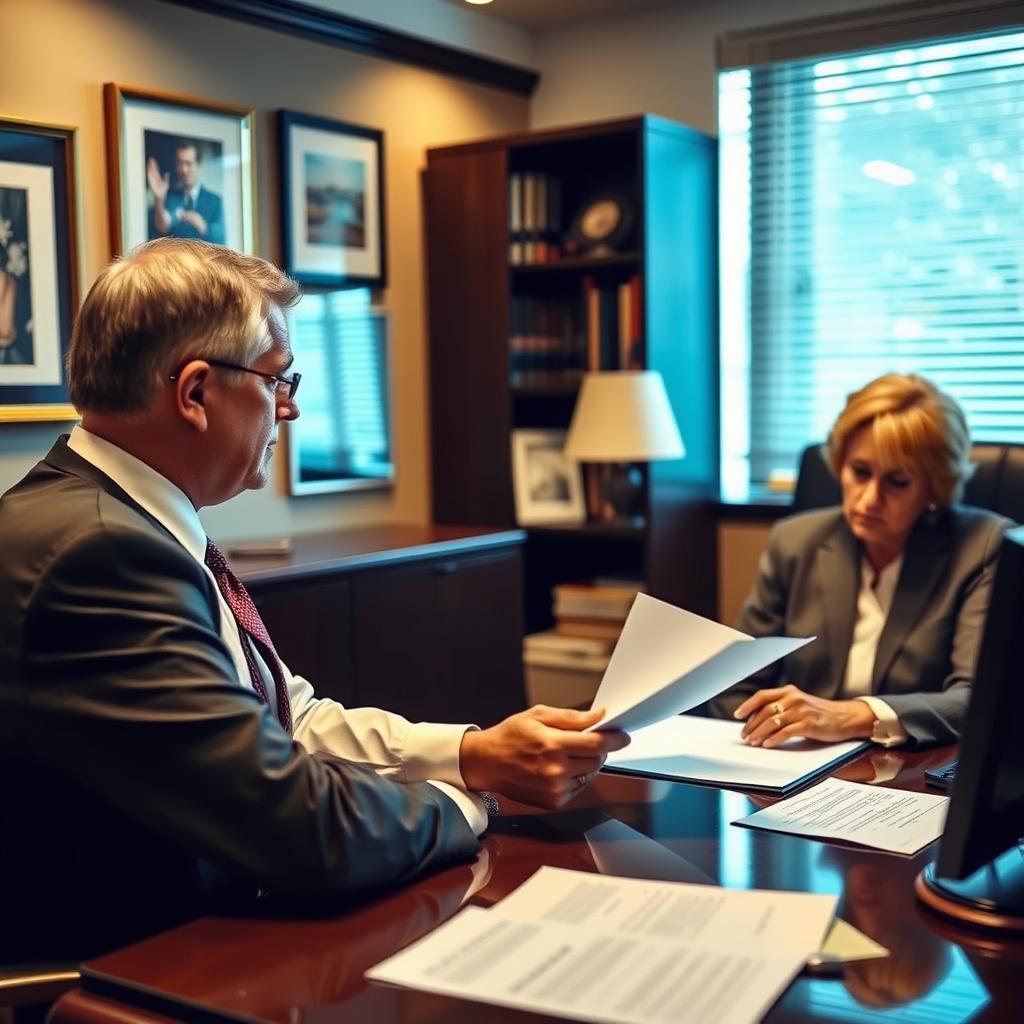
Alimony Lawyer Prince William County, VA
Alimony, referred to in Virginia law as spousal support, is addressed under the factors set out in Va. Code § 20‑107.1. In Prince William County, spousal support determinations are made by the Prince William County Circuit Court, which has exclusive jurisdiction over divorce and related monetary awards. Whether you are the party seeking support or the party from whom support is being requested, the outcome depends on a detailed examination of the circumstances of the marriage and the financial positions of both spouses. Mr. Sris, Owner and Founder of Law Offices Of SRIS, P.C., focuses his family‑law practice on matters such as spousal support, equitable distribution, and post‑divorce modifications, and he appears regularly in the Prince William County Circuit Court and J&DR District Court. To discuss your alimony matter, reach Law Offices Of SRIS, P.C. at (888) 437‑7747. Law Offices Of SRIS, P.C. – Advocacy Without Borders.
What Alimony Means in Prince William County, Virginia
Virginia is an equitable distribution state, meaning that marital property is divided fairly, not necessarily equally. Spousal support, however, is a separate remedy that the court may order regardless of how property is classified. In Prince William County, as in all Virginia jurisdictions, the Circuit Court evaluates the need of the requesting spouse and the ability of the other spouse to pay, guided by the statutory factors enumerated in Va. Code § 20‑107.1. The court considers elements such as the duration of the marriage, the standard of living established during the marriage, the contributions of each spouse to the family’s well‑being—including non‑monetary contributions—and the physical and mental condition of each party.
A spousal support claim can arise during the pendency of a divorce or be litigated after a final decree. Because the Prince William County Circuit Court retains authority to modify support awards under certain conditions, a proceeding initiated years after the divorce is not unusual. The court, located at 9311 Lee Avenue, Suite 230, Manassas, VA 20110, hears all matters involving spousal support in divorce cases; a separate support petition that does not involve a divorce may be filed in the Prince William County Juvenile and Domestic Relations District Court. No single factor controls, and the inquiry is fact‑intensive, making thoughtful preparation essential.
How Mr. Sris and the Firm’s Of Counsel Attorneys Handle Alimony Cases
When Mr. Sris and the firm’s Of Counsel attorneys take on an alimony matter, they begin by assembling a complete picture of the marital finances and the circumstances that gave rise to the support request. The team reviews income documentation, tax returns, business interests, retirement accounts, and any existing separation or property settlement agreements. If one spouse has an ownership interest in a closely held company or a professional practice, a forensic accountant may be engaged to assist with valuation and cash‑flow analysis, providing the court with a reliable economic portrait upon which a support award can be grounded.
For clients who need immediate support while a divorce is pending, the firm can move for a pendente lite order under Va. Code § 20‑103, asking the court to award temporary support and, where appropriate, exclusive use of the family residence. When a permanent award is at issue, the team develops a presentation that ties each of the statutory factors to the specific facts of the case. Should circumstances change—a job loss, a promotion, the retirement of the payor spouse—the firm also represents parties seeking modification of an existing support order. Throughout the process, Mr. Sris and the firm’s Of Counsel attorneys work toward outcomes that align with the client’s objectives while remaining mindful of the court’s broad discretion.
About Mr. Sris and the Firm’s Of Counsel Attorneys
Mr. Sris, Owner and Founder of Law Offices Of SRIS, P.C., concentrates his practice on family law, including spousal support, equitable distribution, and child‑custody matters. A former prosecutor, he brings an analytical approach to financial litigation and is experienced in presenting complex income and asset evidence to the court. Mr. Sris testified before the Virginia House Courts of Justice Committee in support of 2019 HB 635 (chief patron Del. David Bulova). The firm’s Of Counsel attorneys, who contract directly with Law Offices Of SRIS, P.C., contribute additional trial and negotiation experience in family law matters arising in Prince William County and across Northern Virginia. Mr. Sris and the firm’s Of Counsel attorneys bring extensive combined legal experience. Results may vary.
Frequently Asked Questions
What factors does a Prince William County court consider when deciding alimony?
A Virginia court considers the factors listed in Va. Code § 20‑107.1, including each spouse’s need and ability to pay, the length of the marriage, the standard of living during the marriage, and the contributions of each spouse to the family. The court also weighs the age and health of the parties, the sources of each party’s income, and the extent to which one spouse’s education or career was foregone for the benefit of the family. Because no one factor is determinative, a thorough presentation of the relevant financial and personal circumstances is important. For a fuller discussion of how these factors may apply in a specific situation, reach Law Offices Of SRIS, P.C. at (888) 437‑7747.
Can alimony be modified after a divorce is final in Virginia?
Yes, a Virginia court may modify spousal support if the party seeking the change demonstrates a material change in circumstances that was not anticipated at the time of the original award. Examples can include a significant increase or decrease in income, a change in health, or the remarriage of the recipient. The party requesting the modification must file a motion in the Prince William County Circuit Court that retains jurisdiction over the support order. The court will examine only the changed circumstances that occurred after the last order; it will not revisit the original award de novo. Because the procedural requirements are strict, consulting with an experienced family‑law attorney before filing is prudent.
Is there a difference between spousal support and alimony in Virginia?
No, the terms “alimony” and “spousal support” are used interchangeably in Virginia to refer to the same financial obligation that one spouse may be ordered to pay the other following a divorce or legal separation. Virginia’s statutory scheme, particularly Va. Code § 20‑107.1, governs both terminology. The obligation can be temporary (pendente lite), or it can be awarded for a defined rehabilitative period or, in limited circumstances, indefinitely. For more on the types of support available, contact Law Offices Of SRIS, P.C. at (888) 437‑7747.
Do I need to go to court to obtain alimony in Prince William County?
Alimony is ordinarily established either by an agreement between the parties—incorporated into a court order—or through a court hearing and a judge’s ruling. If the spouses can reach a mutually acceptable settlement, the Circuit Court will typically approve it without a contested hearing. When settlement is not possible, the matter proceeds to trial, where the judge receives evidence and determines the support amount and duration. In either scenario, the court must be involved to enter an enforceable order.
How does Law Offices Of SRIS, P.C. Approach an alimony enforcement matter?
When a former spouse fails to pay court‑ordered support, the firm works to bring the matter before the court that issued the order, seeking enforcement through the contempt power or other available remedies. The team gathers payment records, communicates with opposing counsel, and attempts to resolve the arrearage without an extended hearing when possible. If the payor continues to disregard the obligation, the firm may request that the court issue a show‑cause citation. A finding of contempt can result in a judgment for the unpaid amount, an award of attorney fees, and in some cases incarceration.
Additional Resources
For representation in neighboring communities, see our family‑law pages for Fairfax County family law lawyer, Stafford County family law lawyer, Fauquier County family law lawyer, and Loudoun County family law lawyer.
Authoritative primary‑law sources: Virginia Code Title 20, Chapter 6 (Divorce, Affirmation and Annulment) · Virginia’s Judicial System · Prince William County Circuit Court.
Attorney advertising. Prior results do not guarantee a similar outcome. Results may vary.
Case results depend on a variety of factors unique to each case.